
Kobo Website Redesign
Problem
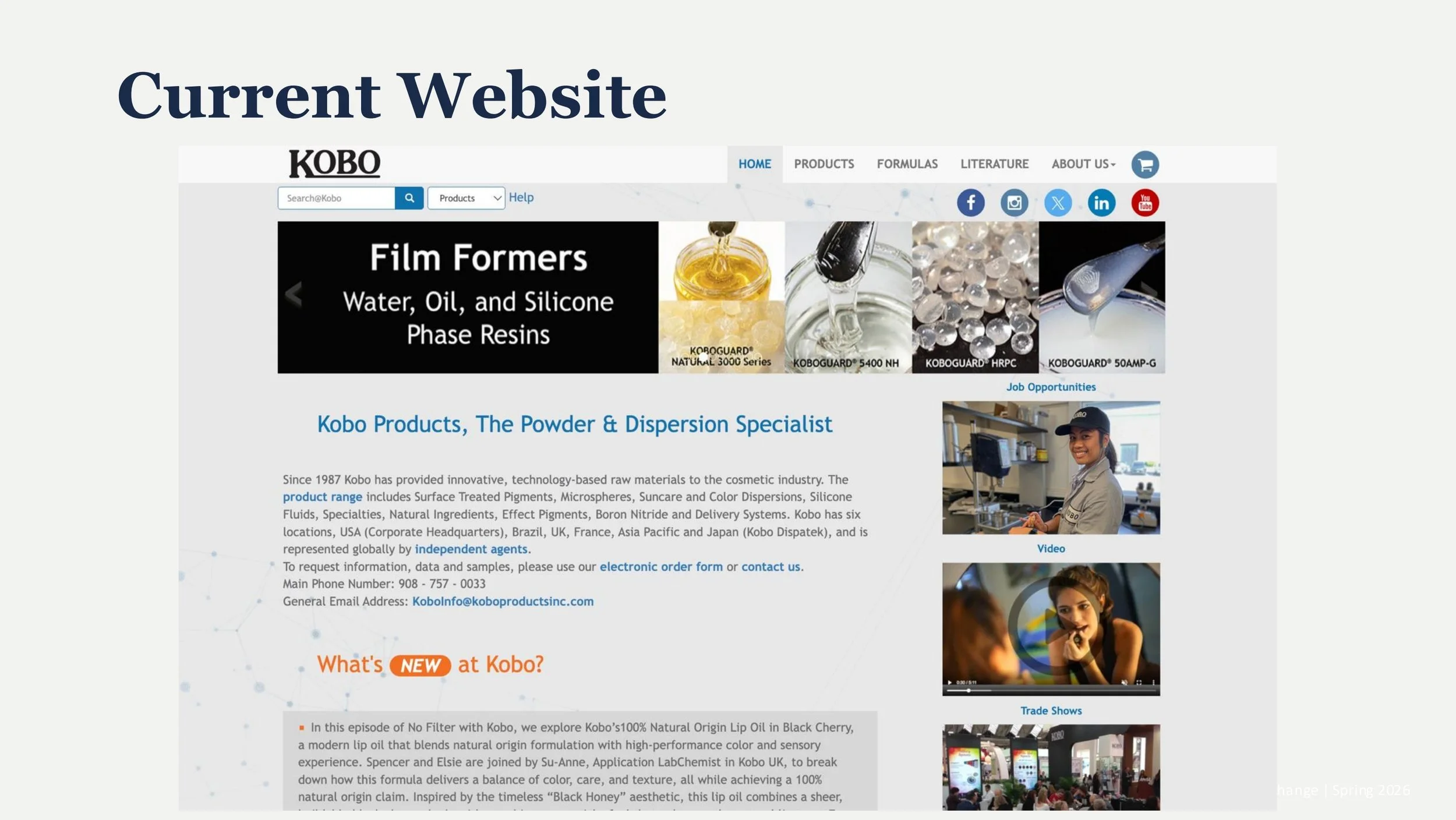
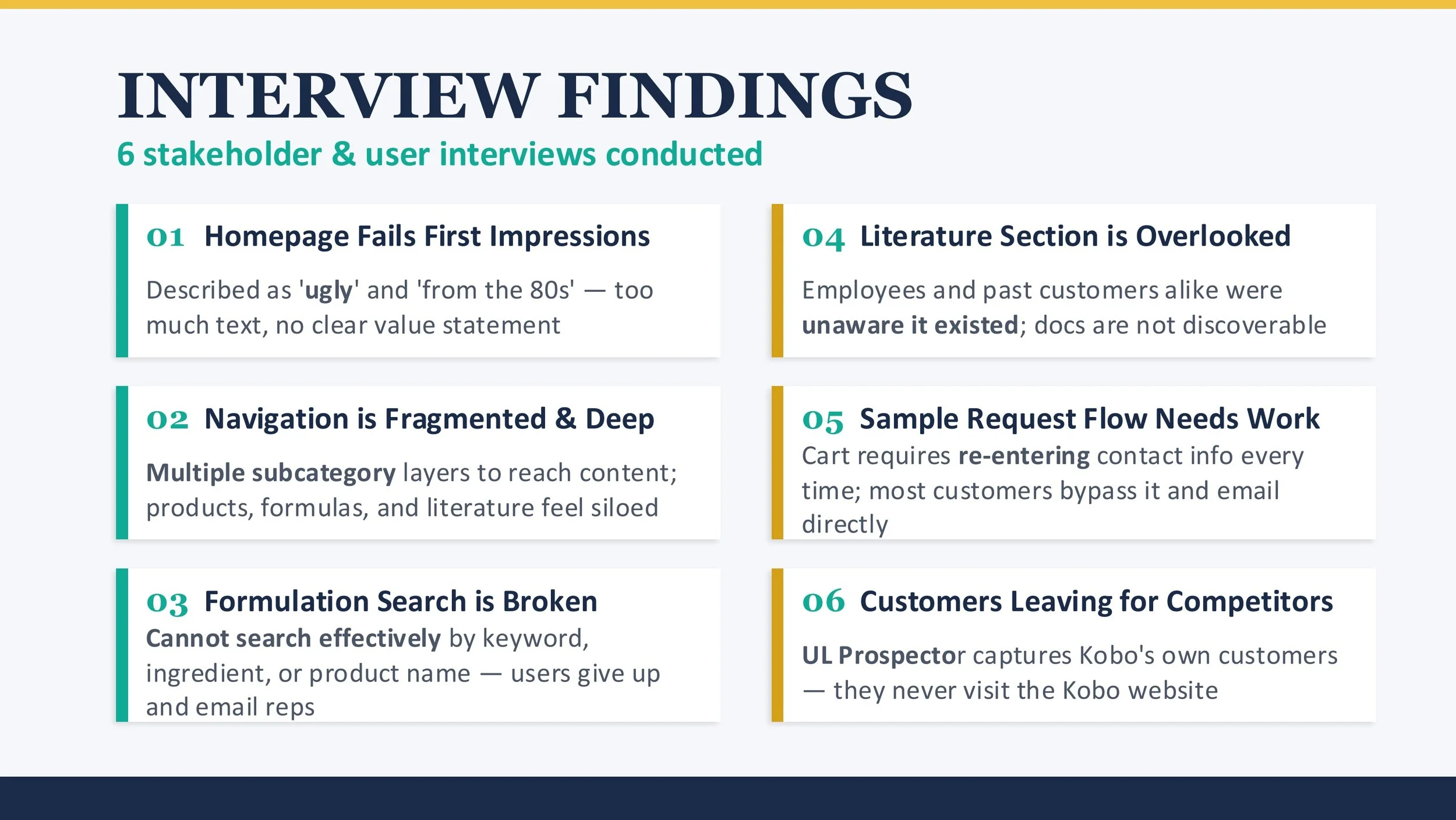
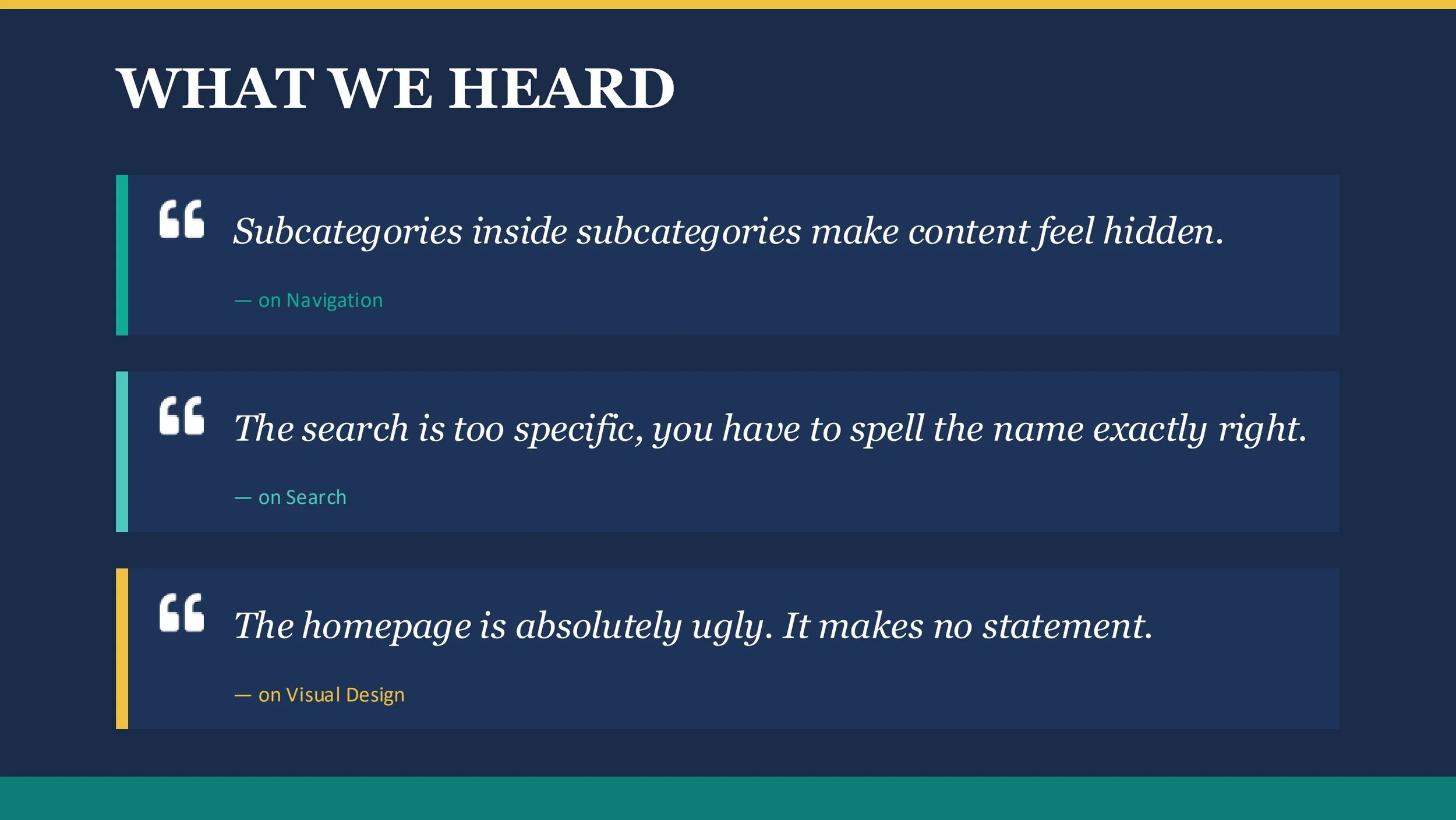
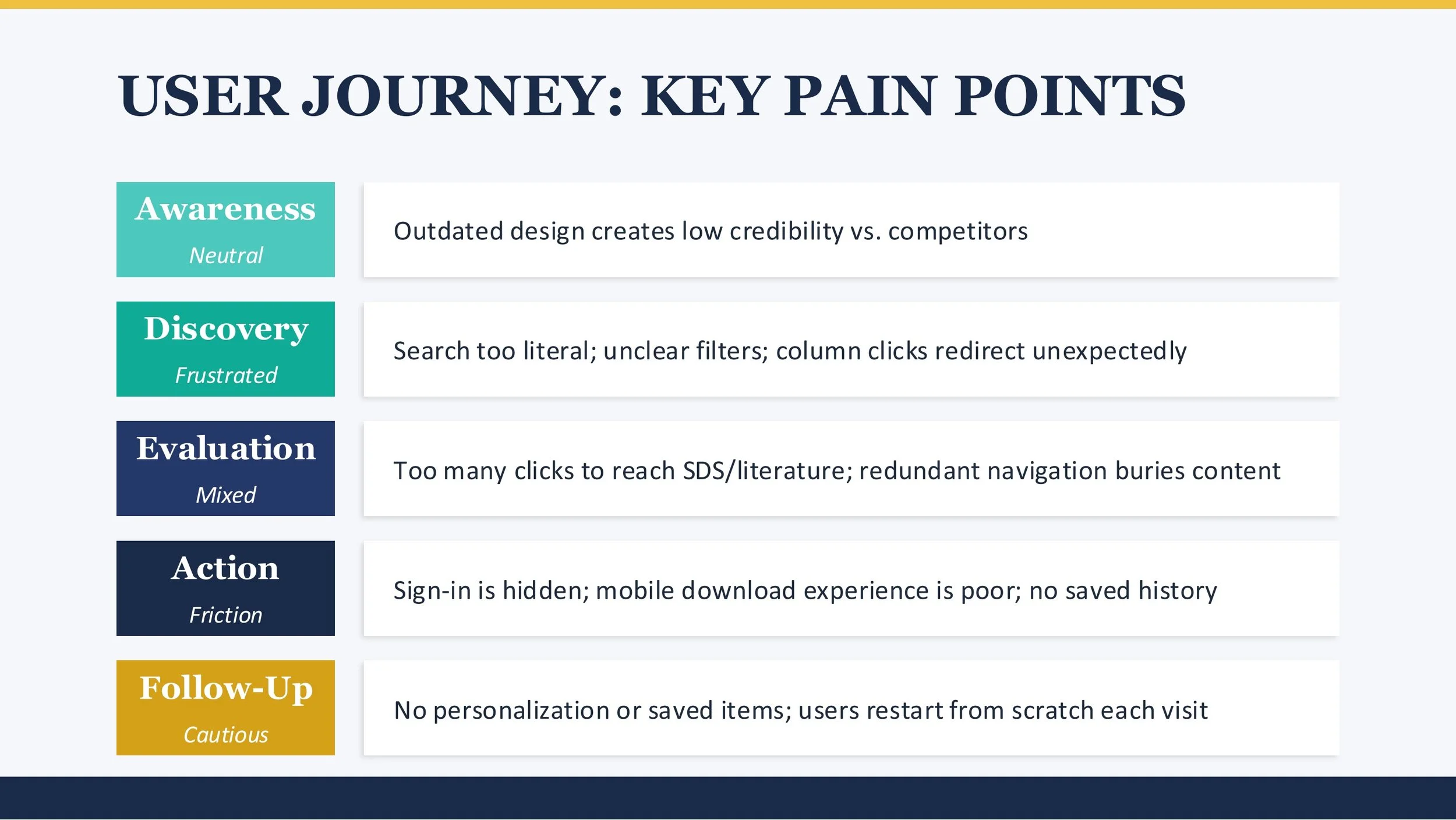
The existing Kobo website felt visually outdated, which risked undermining user confidence in the company and its products. An aging interface can signal neglect, making visitors question whether the business is credible or actively maintained. Our goal was to identify the specific UX shortcomings behind that impression: examining navigation, visual hierarchy, content structure, and the overall flow of viewing products and ordering samples, so we could understand what was eroding trust and where the experience broke down.
Process
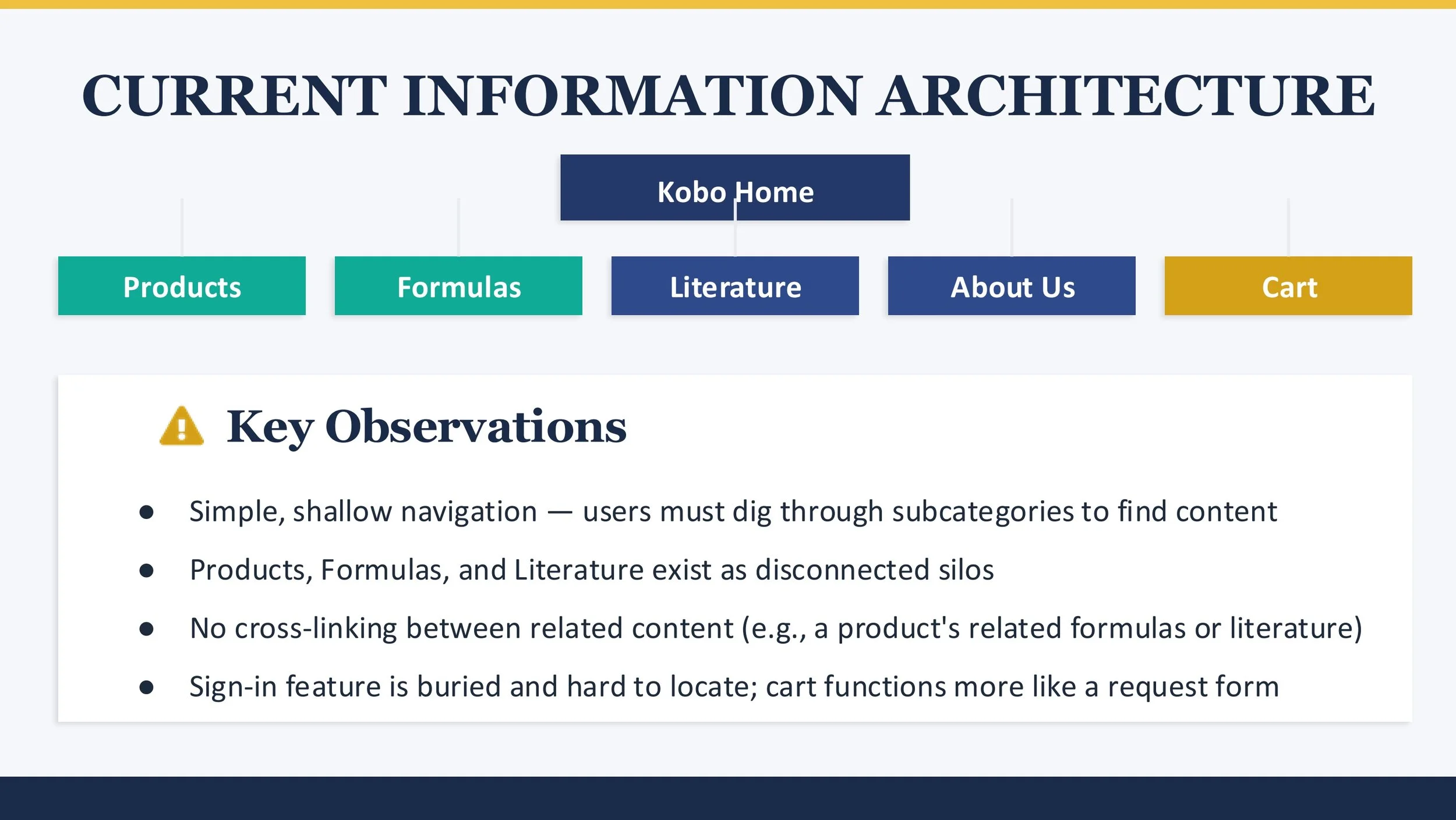
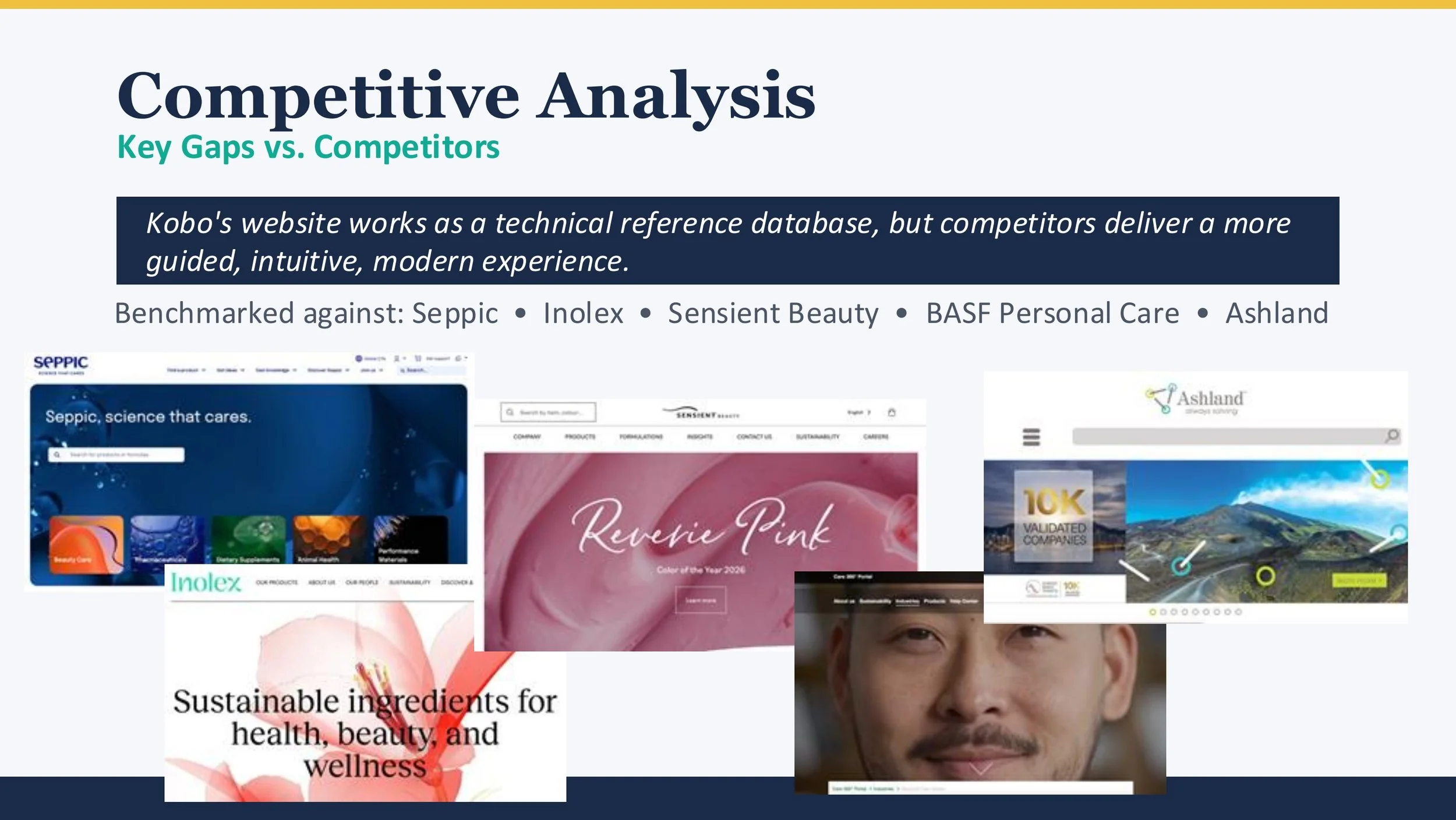
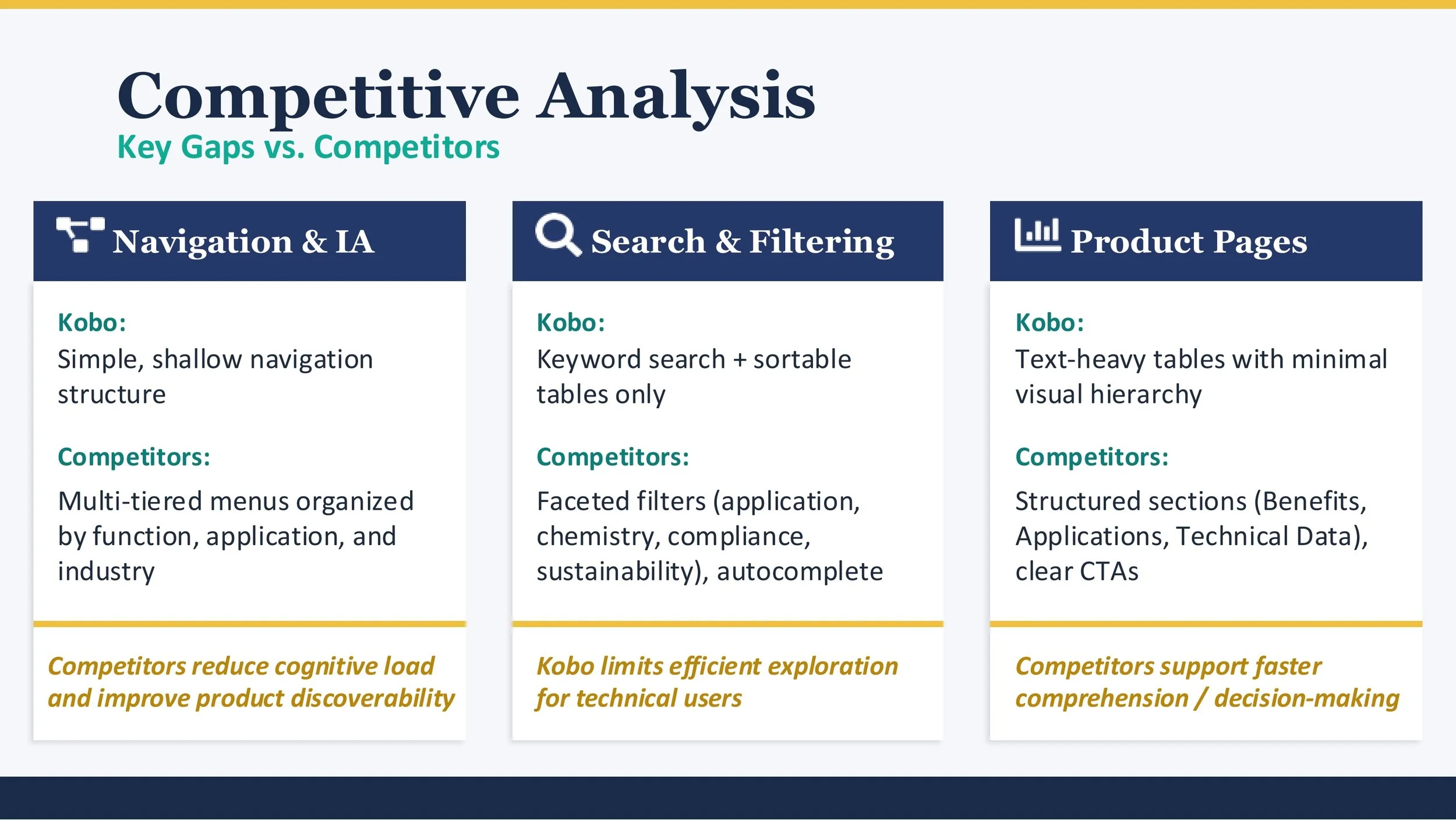
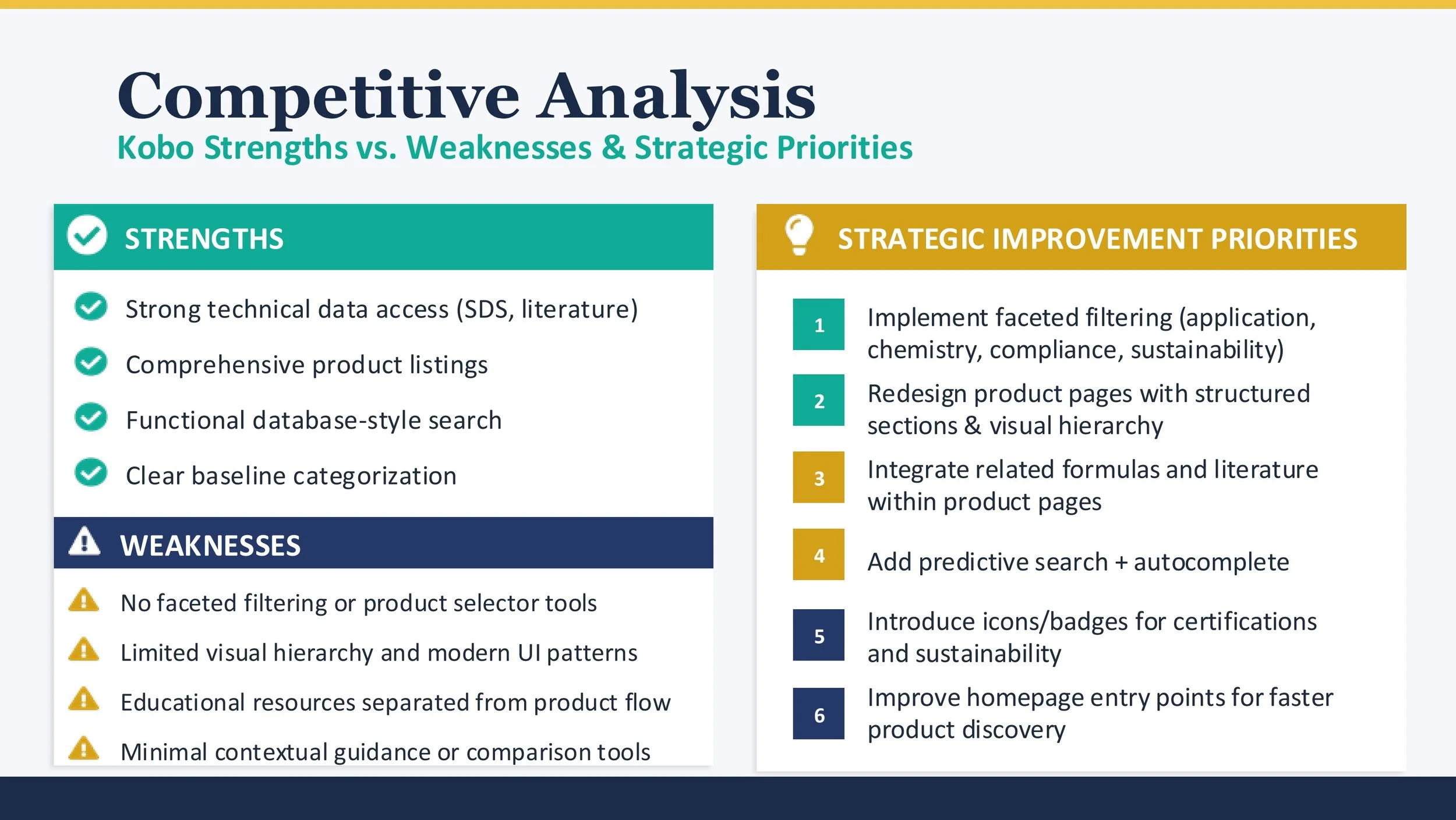
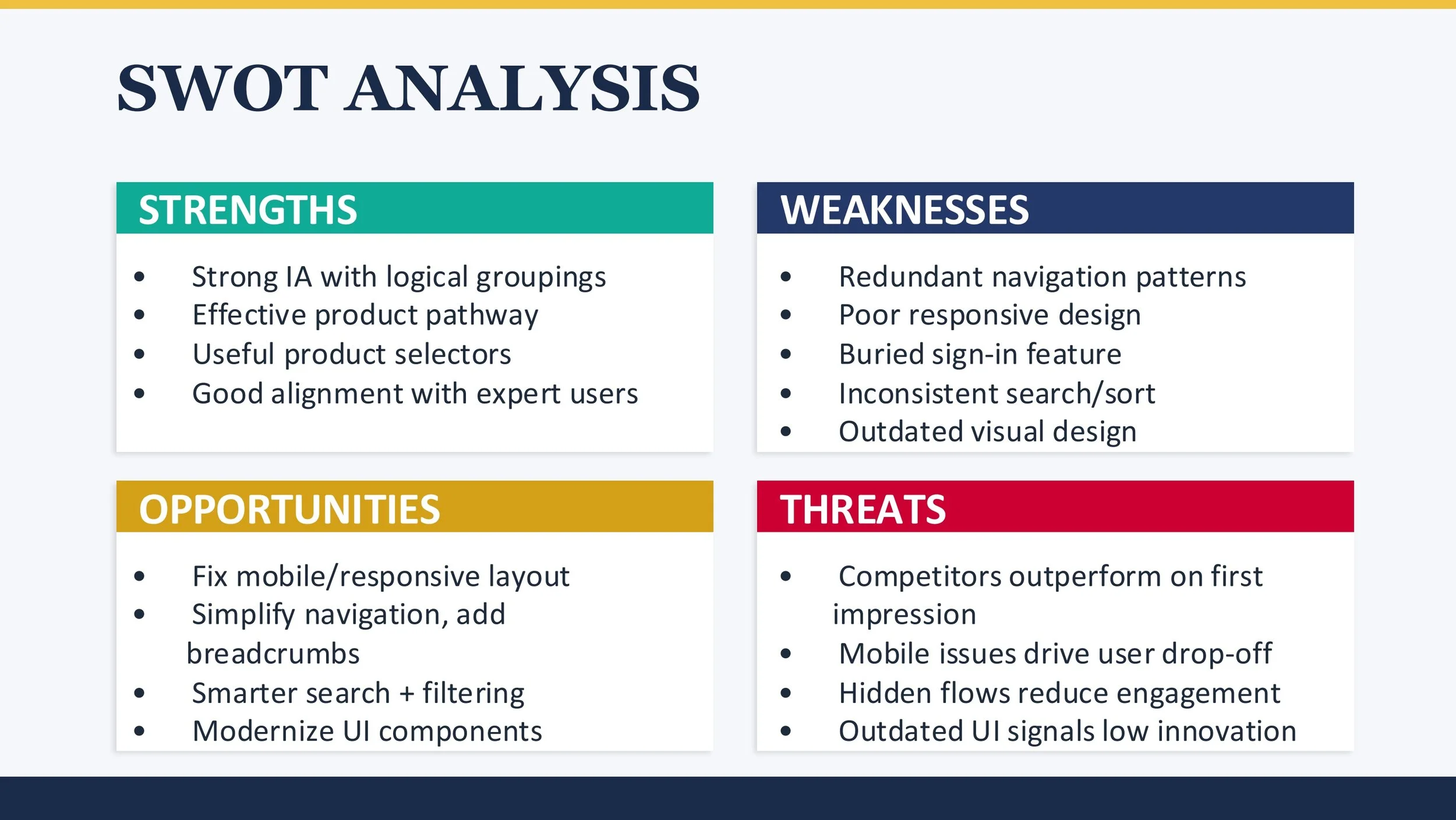
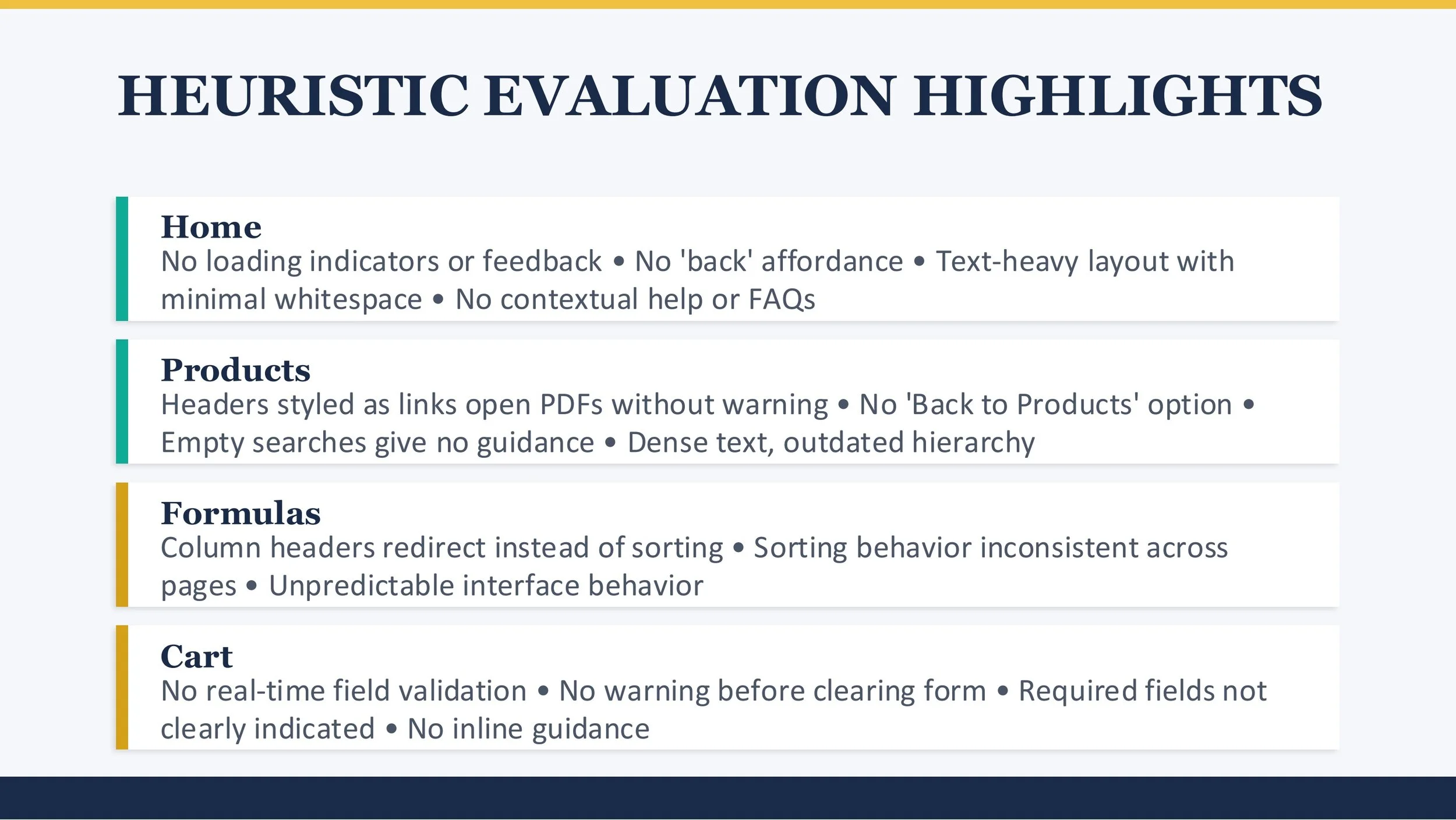
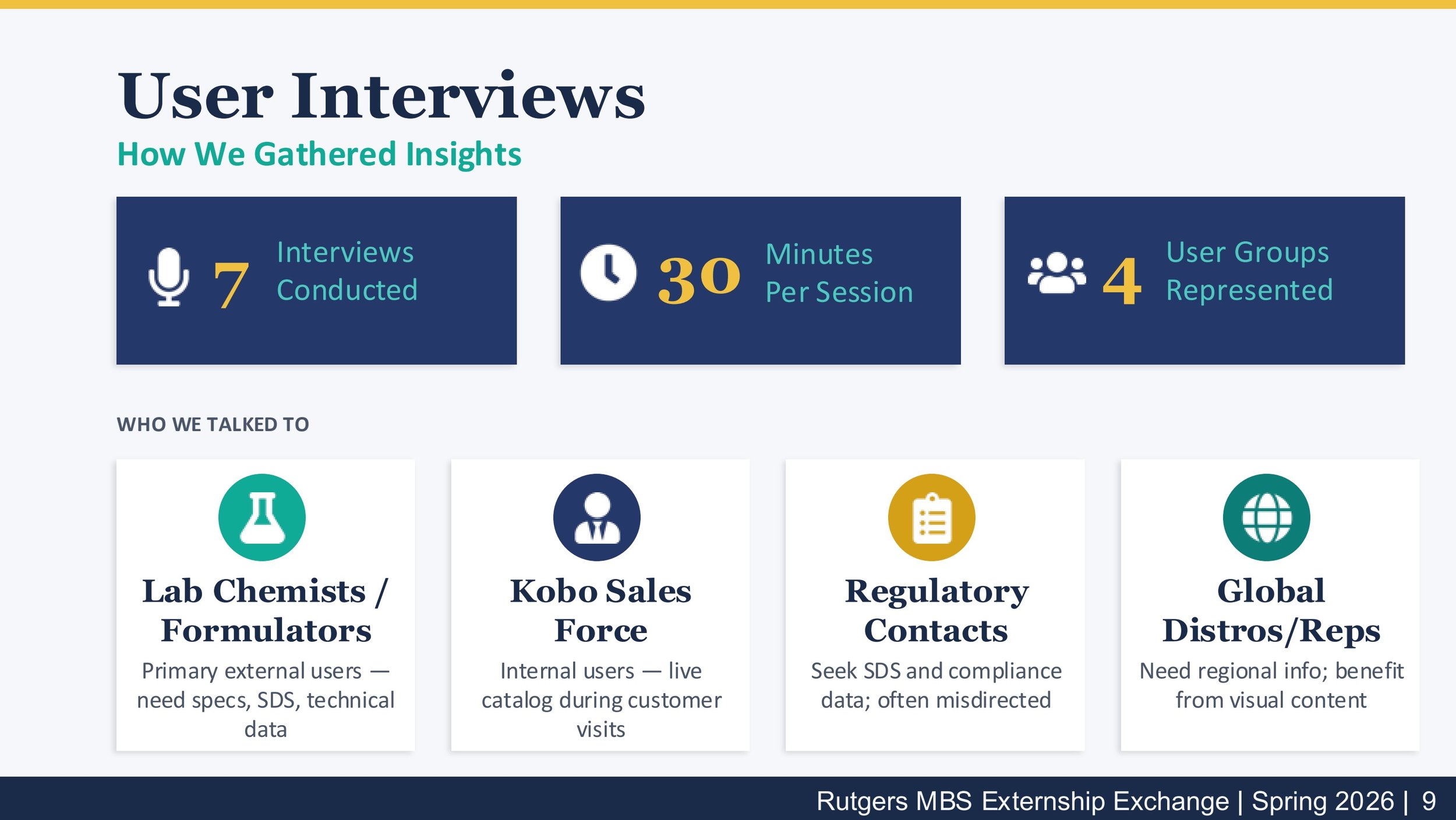
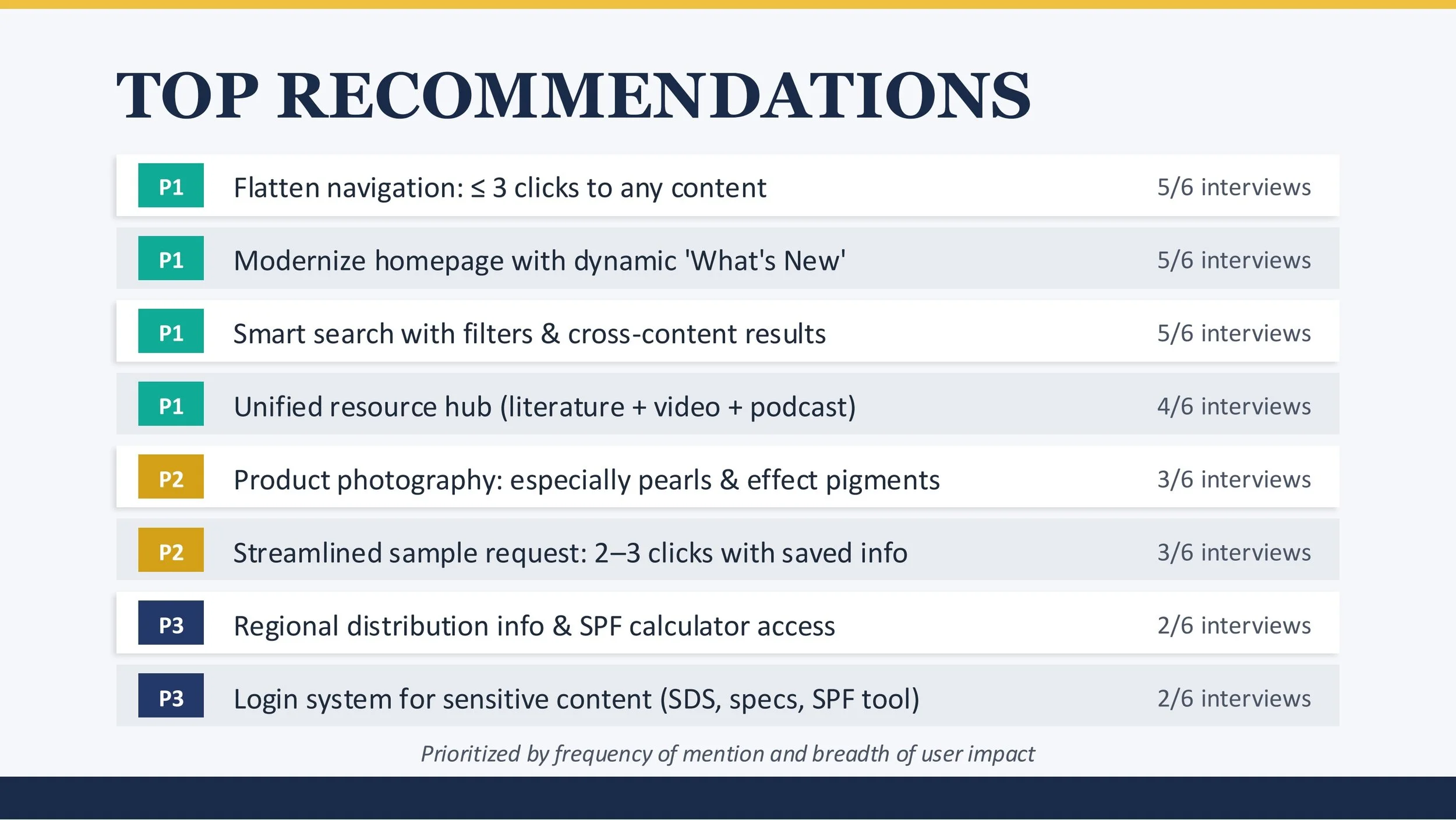
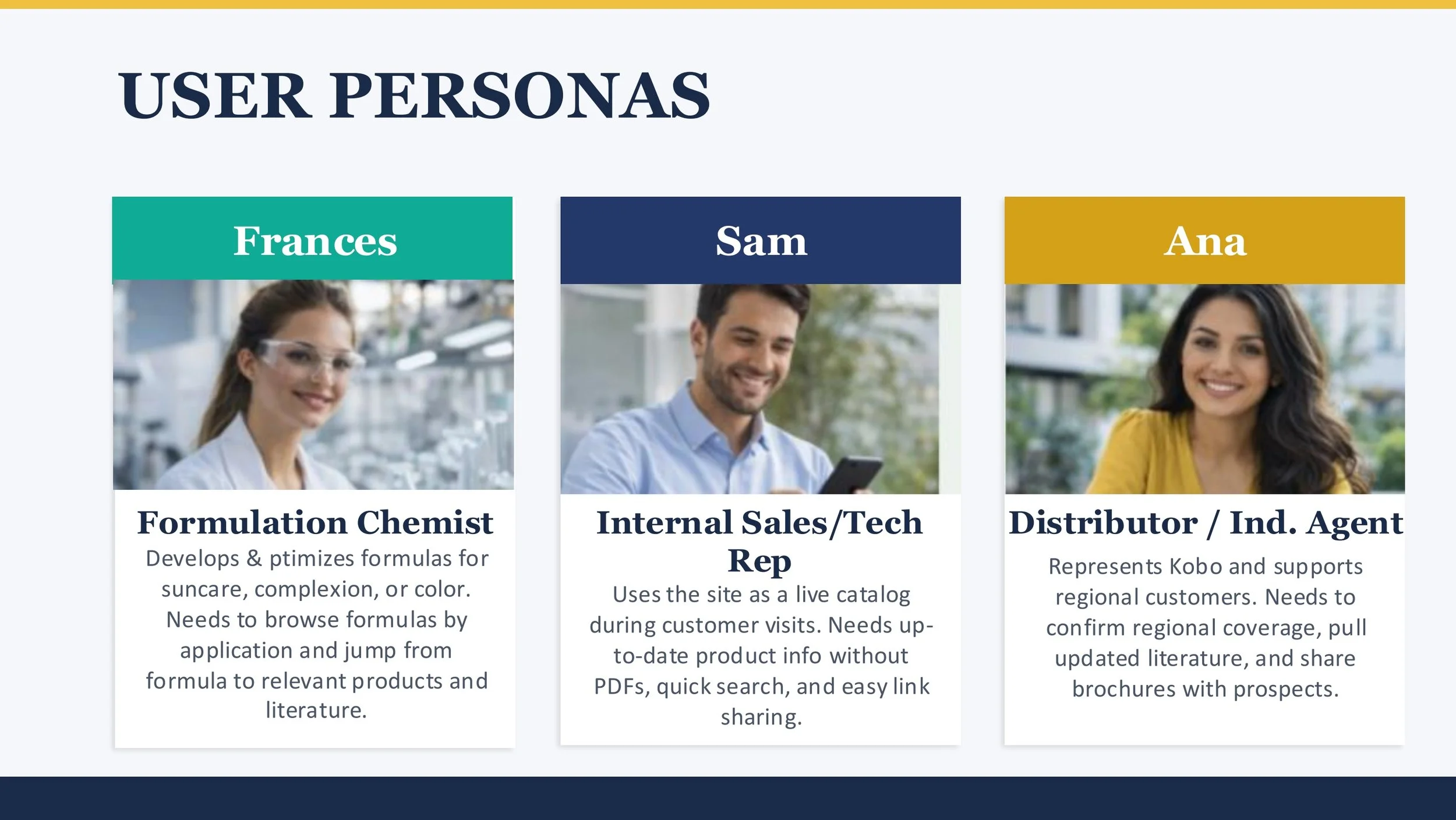
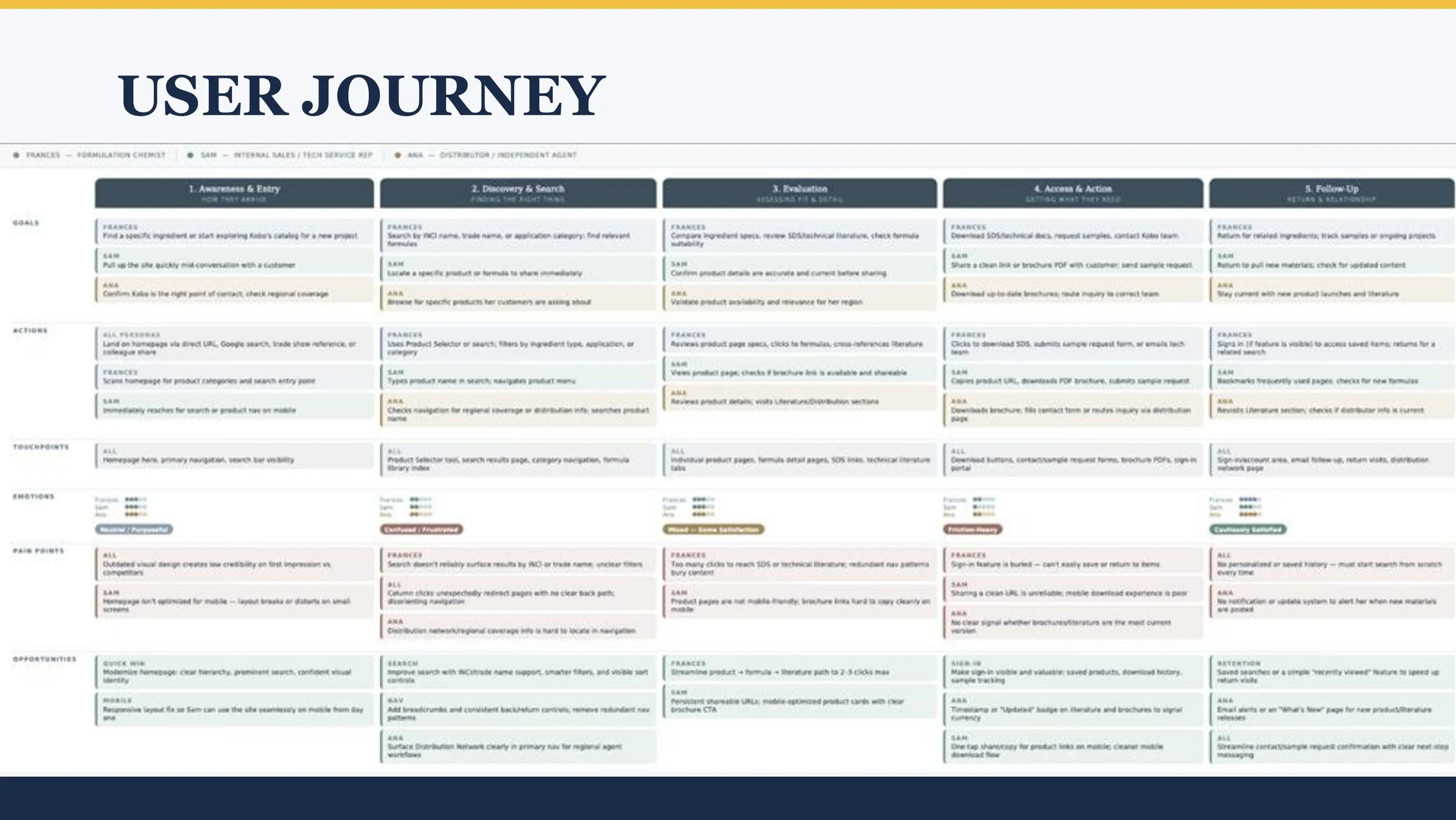
We followed a structured, research-driven design process. We began by evaluating the current information architecture to understand how content was organized and where users might get lost. From there we ran a competitive analysis and SWOT analysis to position Kobo against industry peers, and conducted a heuristic evaluation to surface usability issues against established best practices. To ground our work in real user needs, we held user interviews, then synthesized those insights into user personas and a user journey map. Together, these methods gave us a clear, evidence-based foundation for the redesign.
Solution
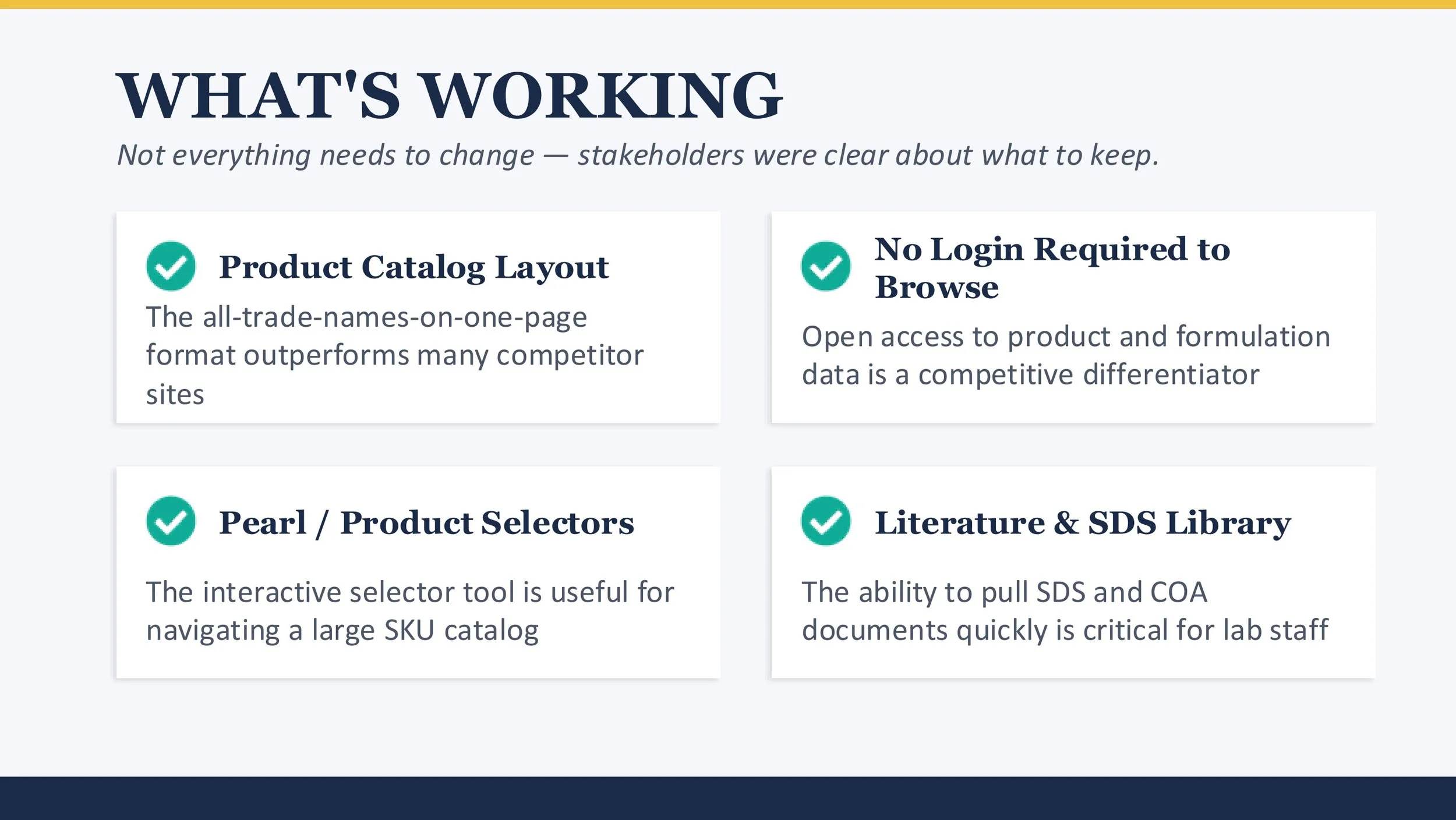
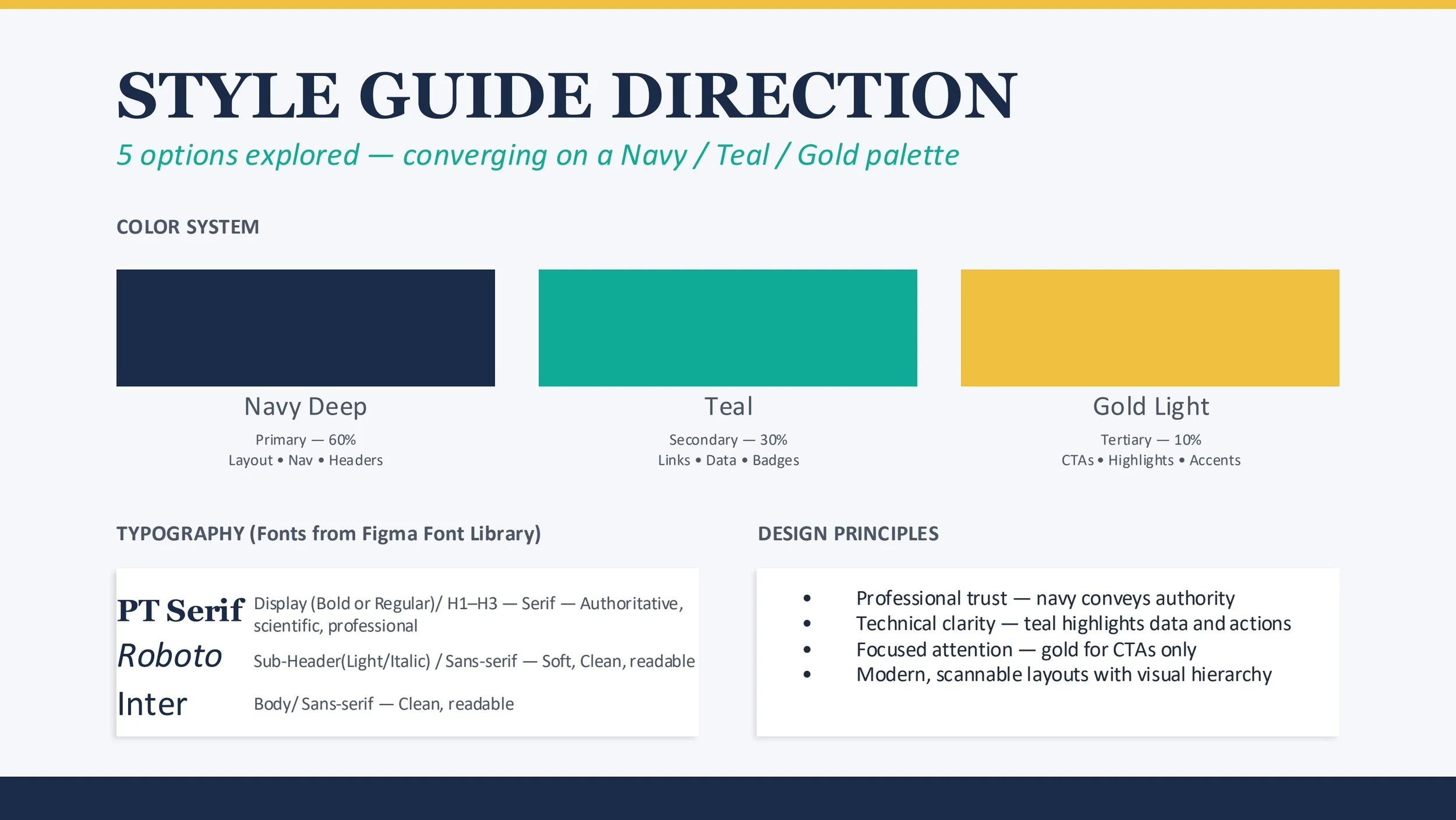
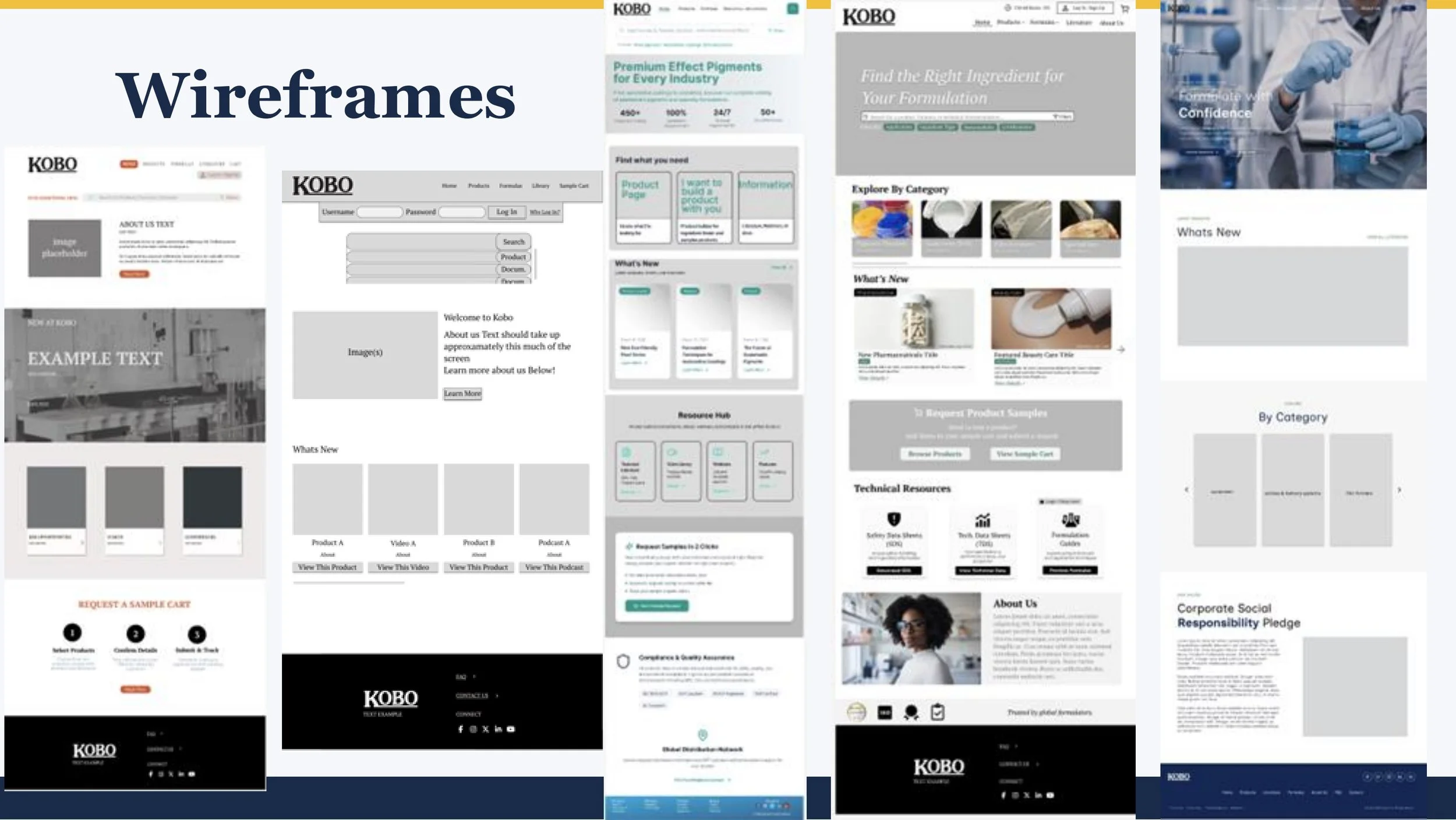
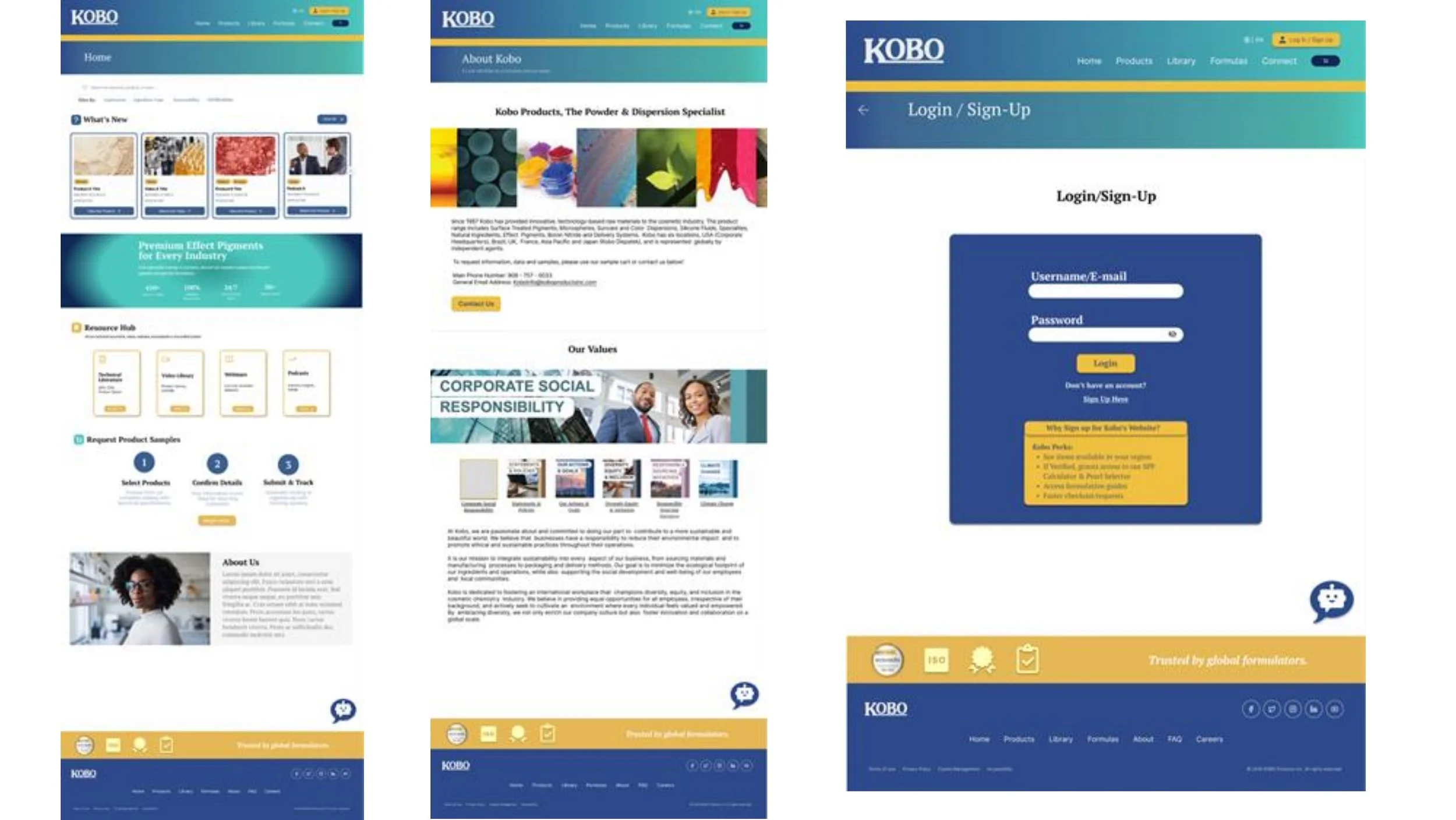
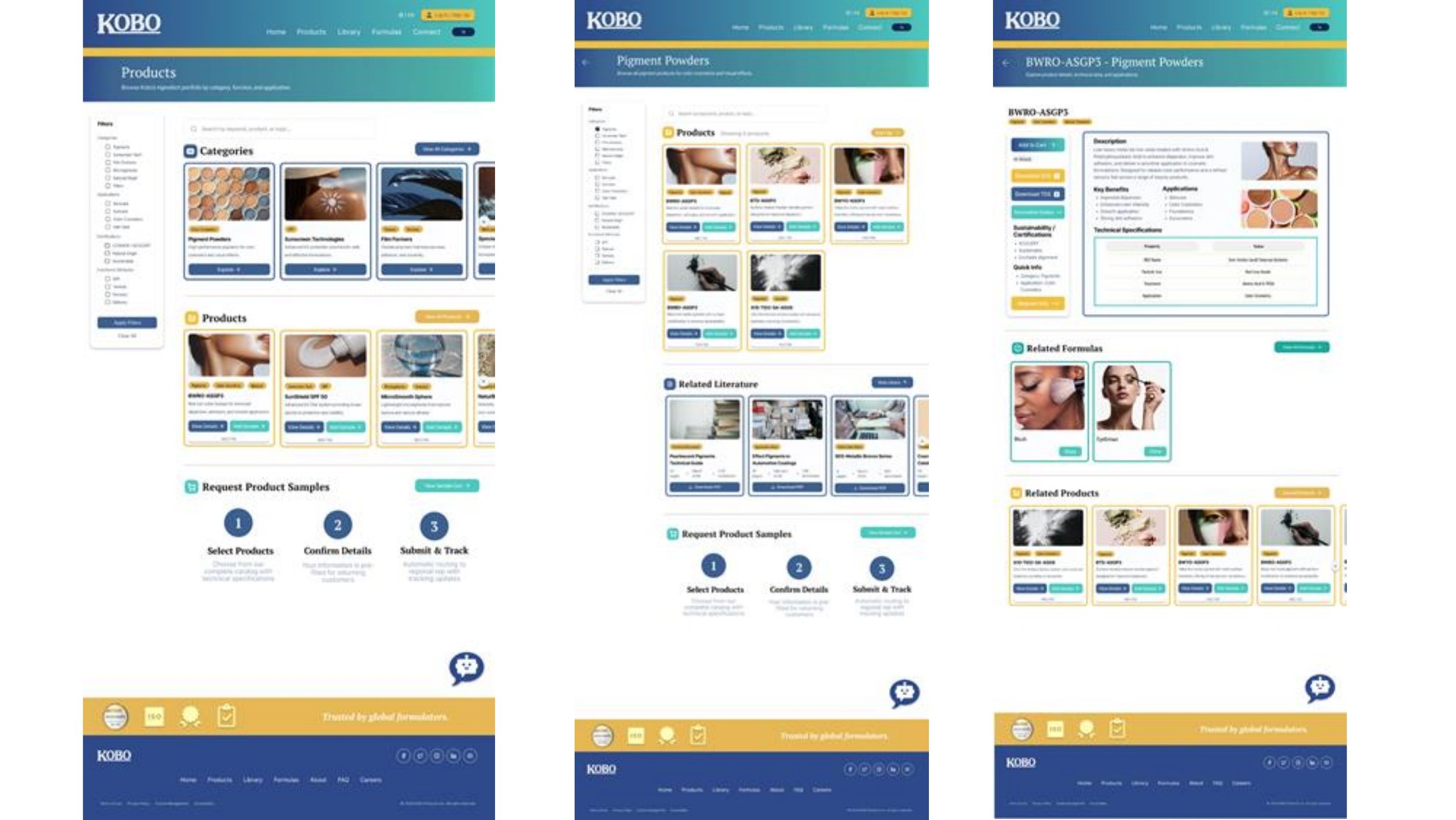
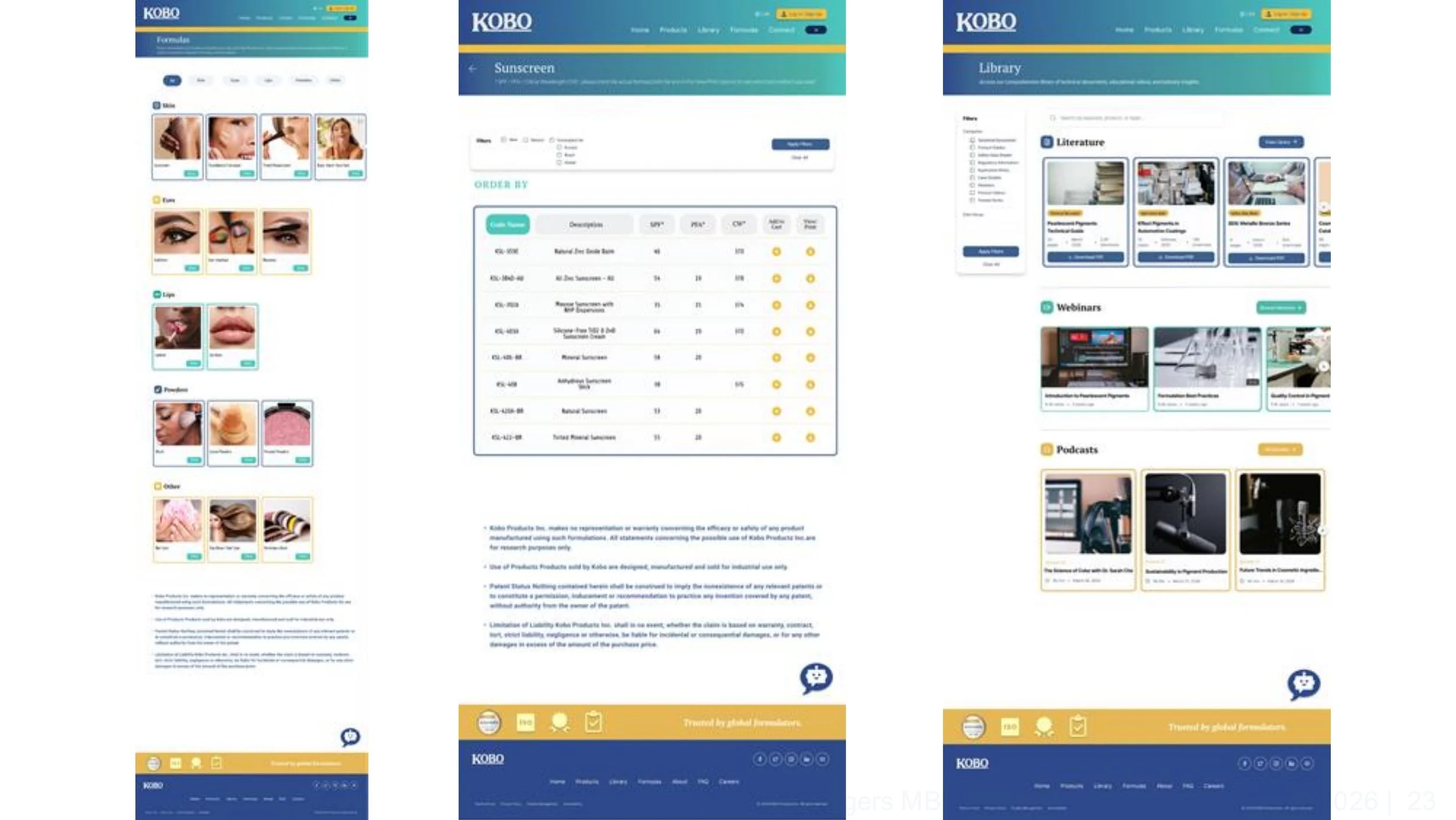
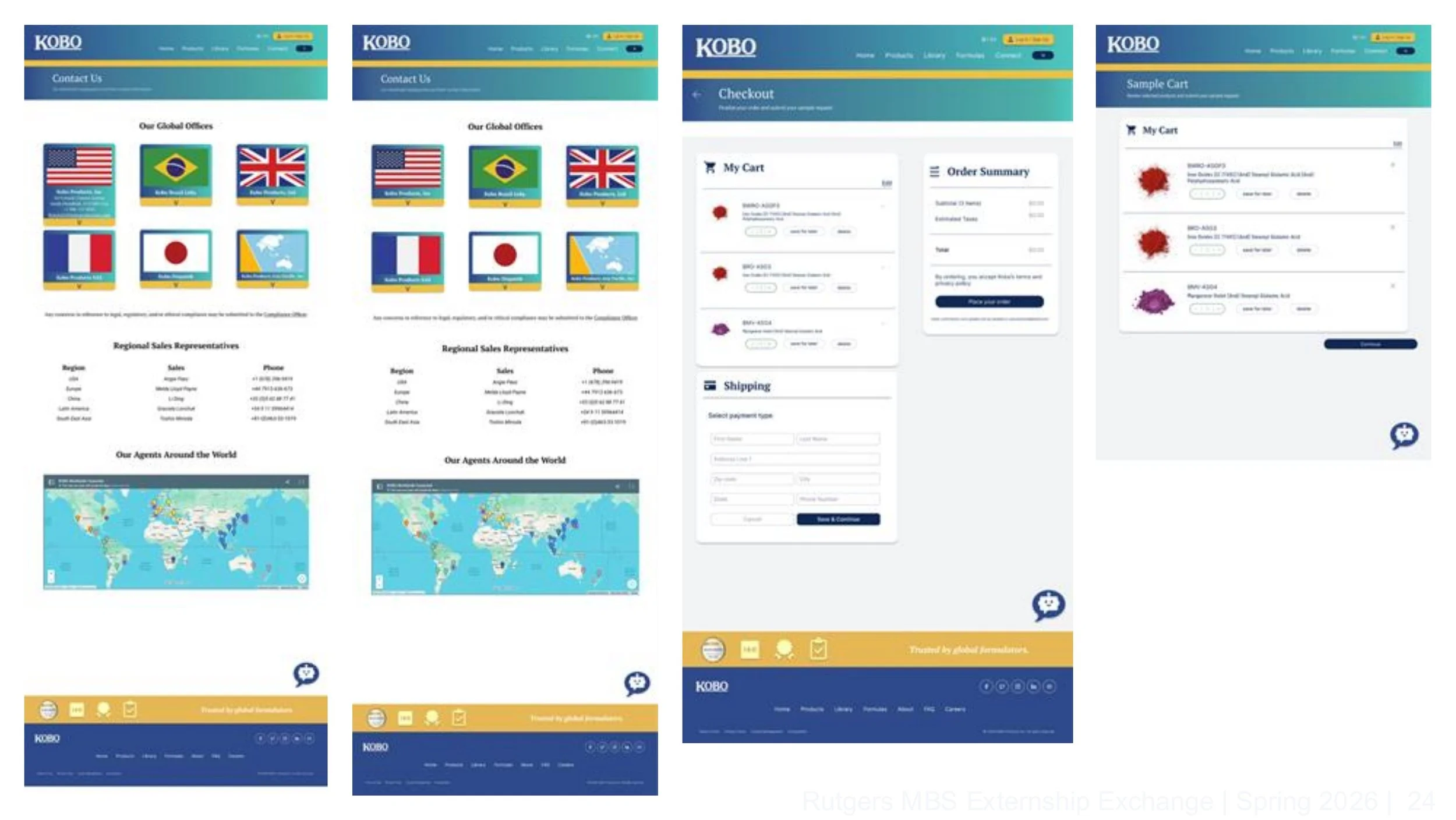
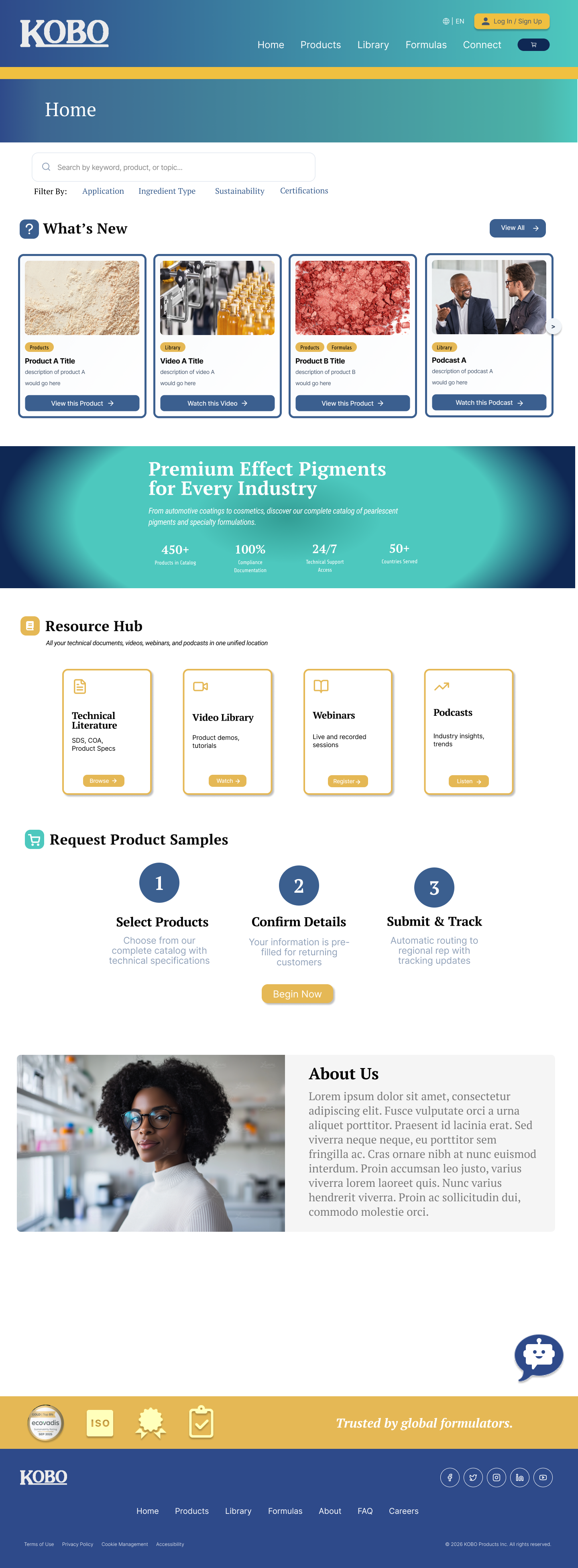
We designed a more modern, user-friendly interface aimed at building trust and reducing friction. The new design streamlines the core tasks of browsing products and ordering samples, giving users a clearer, more intuitive path from discovery to action. Updated visual design, improved navigation, and a cleaner information architecture work together to make the experience feel credible, current, and easy to use.
Impact
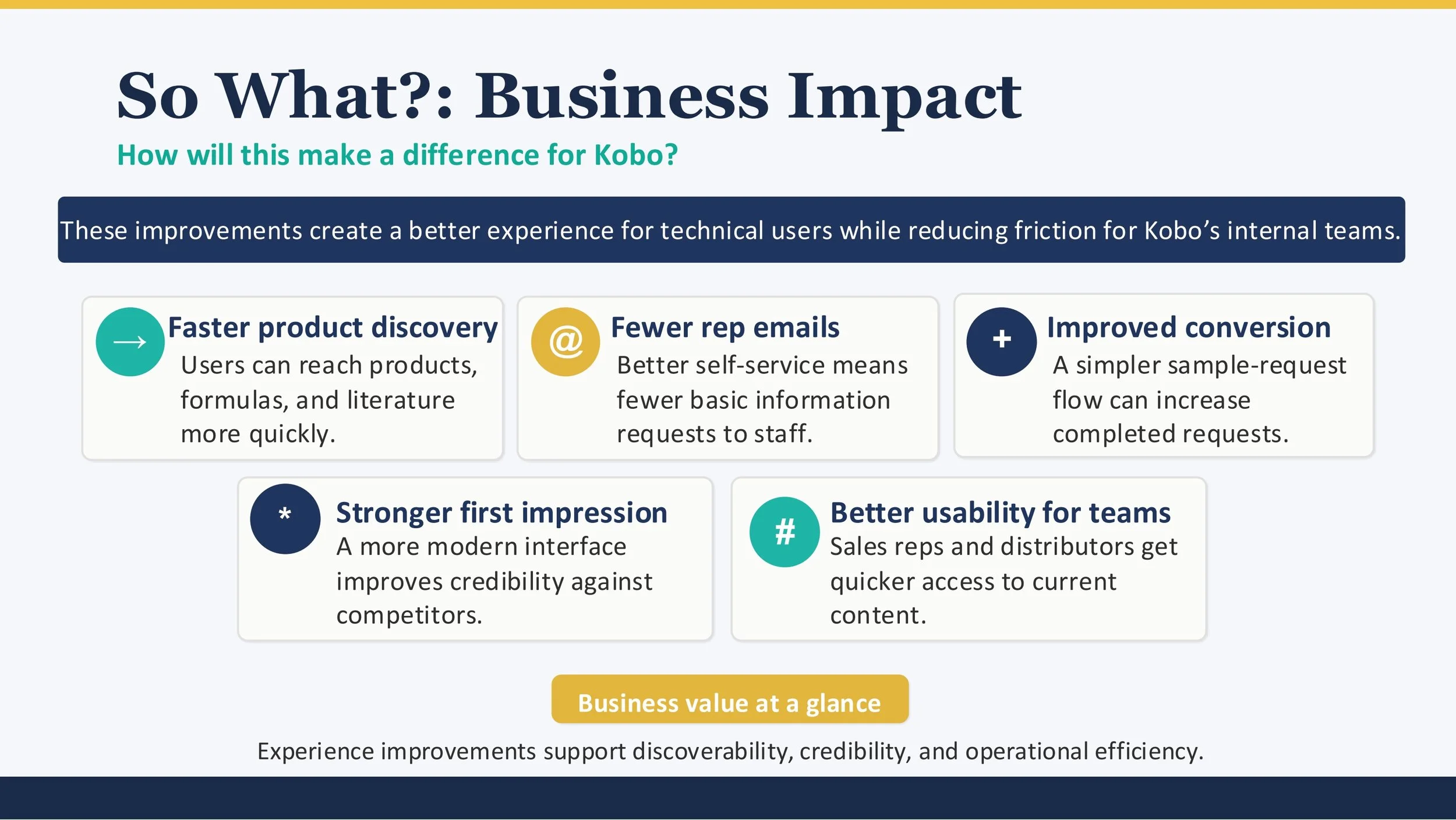
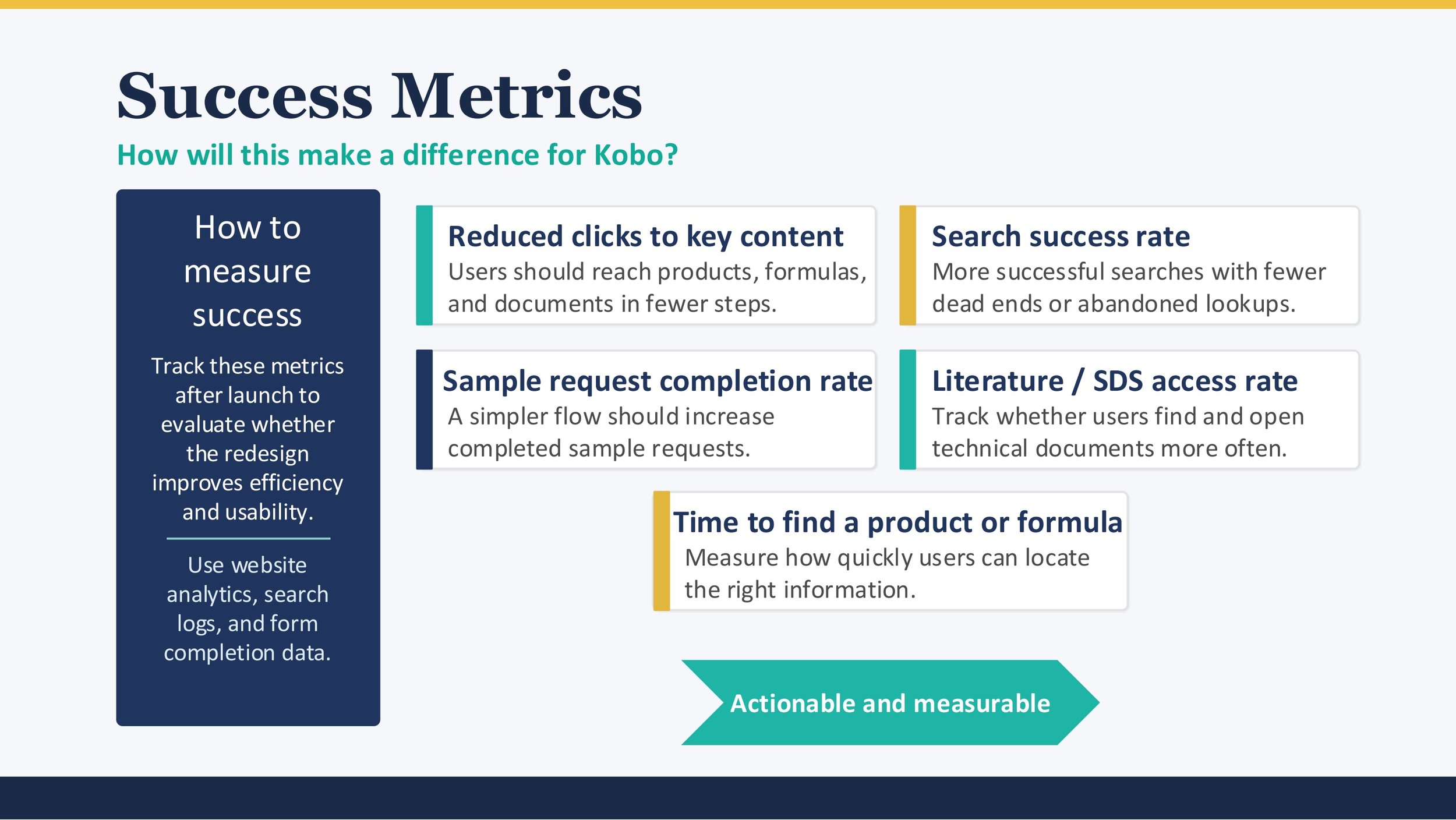
The redesign gave Kobo a clear, validated direction for modernizing its digital presence. By tying every design decision back to research and user needs, we produced a concept that strengthened brand credibility and simplified the product-to-sample journey, equipping the team with actionable recommendations and a tested design foundation to move forward.
My role
I led a team of five students, myself (a UX MBS student), one Product Design MBS student, and three undergraduates with no prior design experience. As lead designer and project manager, I directed the design strategy and process while coordinating the team's workflow, delegating tasks, and mentoring members who were new to design to ensure cohesive, high-quality output.
Rutgers Externship | Spring 2026