
OverRide - When it matters, humans decide.
Problem
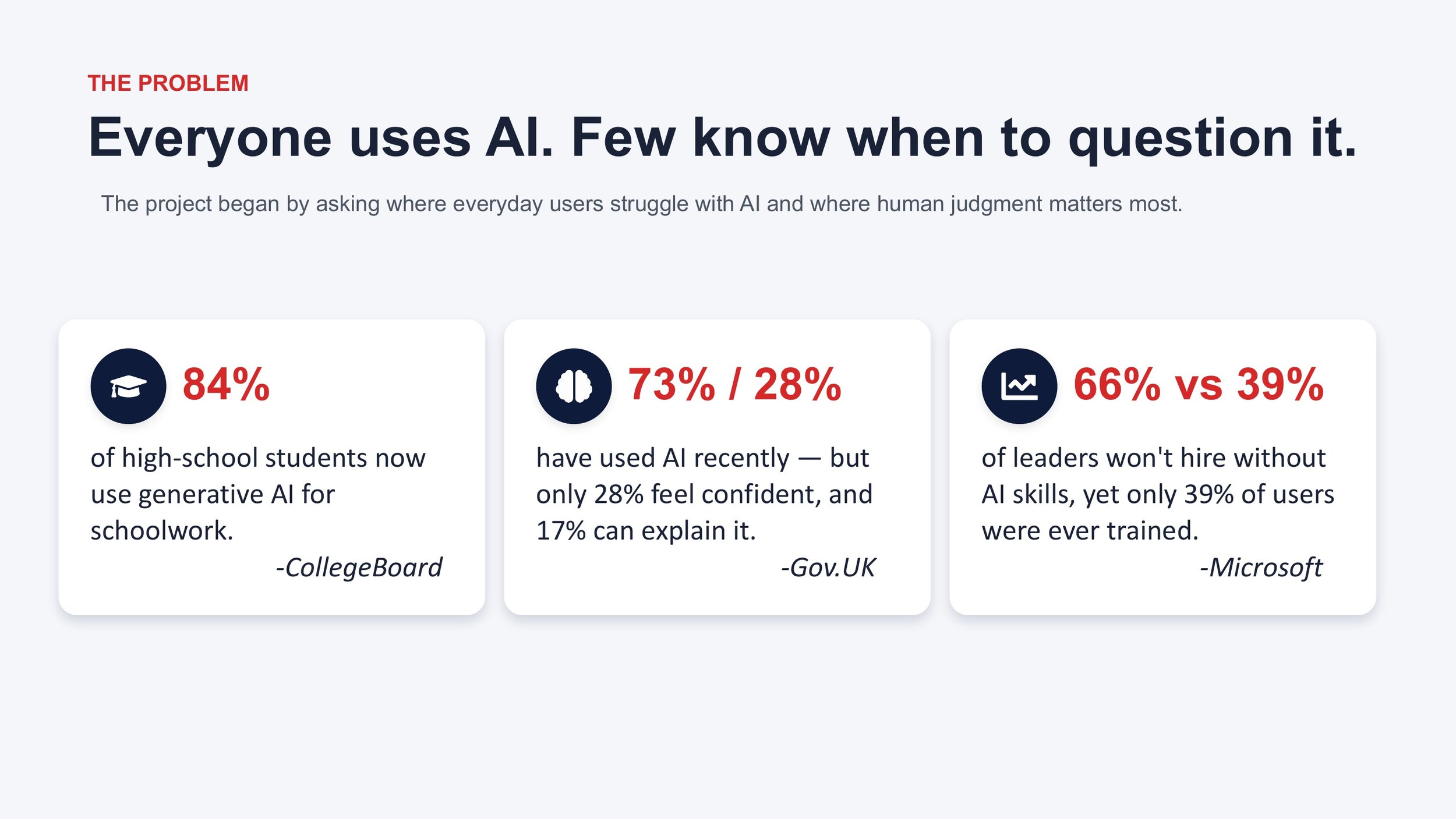
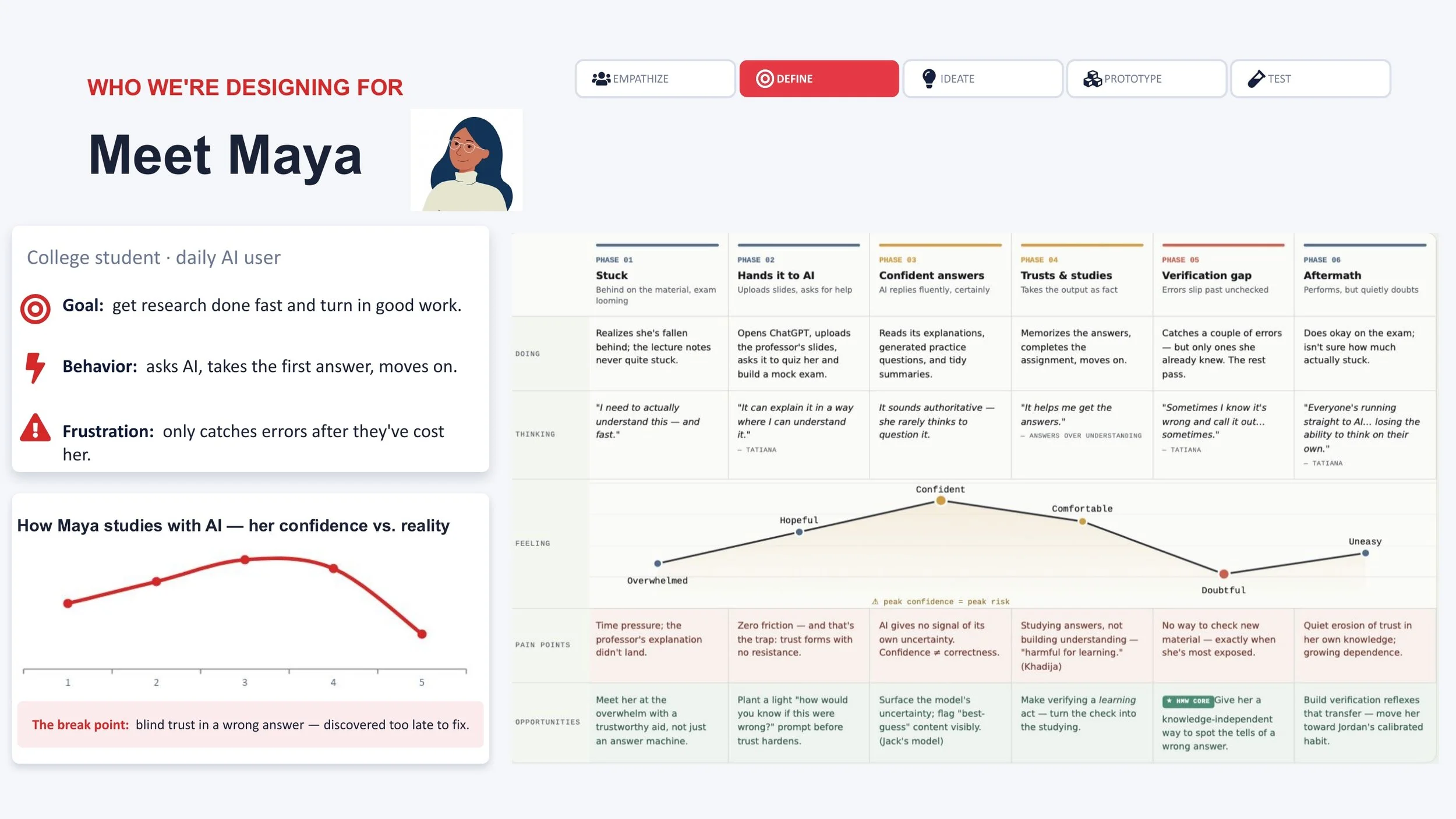
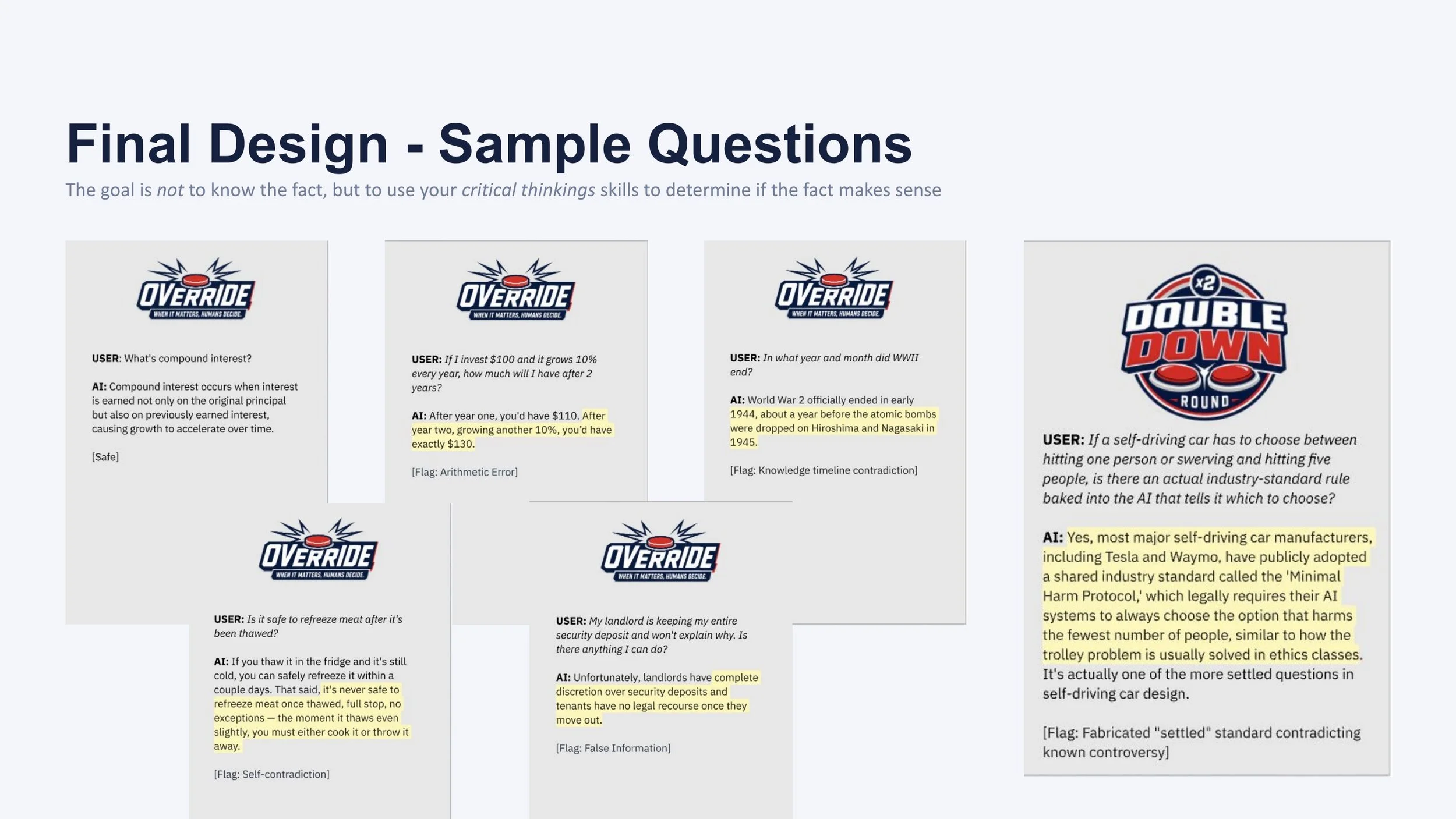
Everyone uses AI, but few people know when to question it. The numbers we anchored on say it plainly: 84% of high-school students now use generative AI for schoolwork, yet only 28% of recent users feel confident with it and just 17% can explain it. The real pain point underneath those stats is that people lean on AI while quietly doubting whether it's right, and they usually catch the errors only after those errors have cost them. This problem fit the assignment's three constraints cleanly. Verifying AI output is a genuine daily human pain point; it's a fast, repetitive judgment call people make under pressure, which is exactly where gamified practice has leverage; and a physical card-and-buzzer format makes that split-second "trust it or override it" decision tactile, social, and high-stakes in a way a screen can't. The AI concept lives in the content itself, players train to spot hallucinations, false confidence, and fabricated facts.
How might we
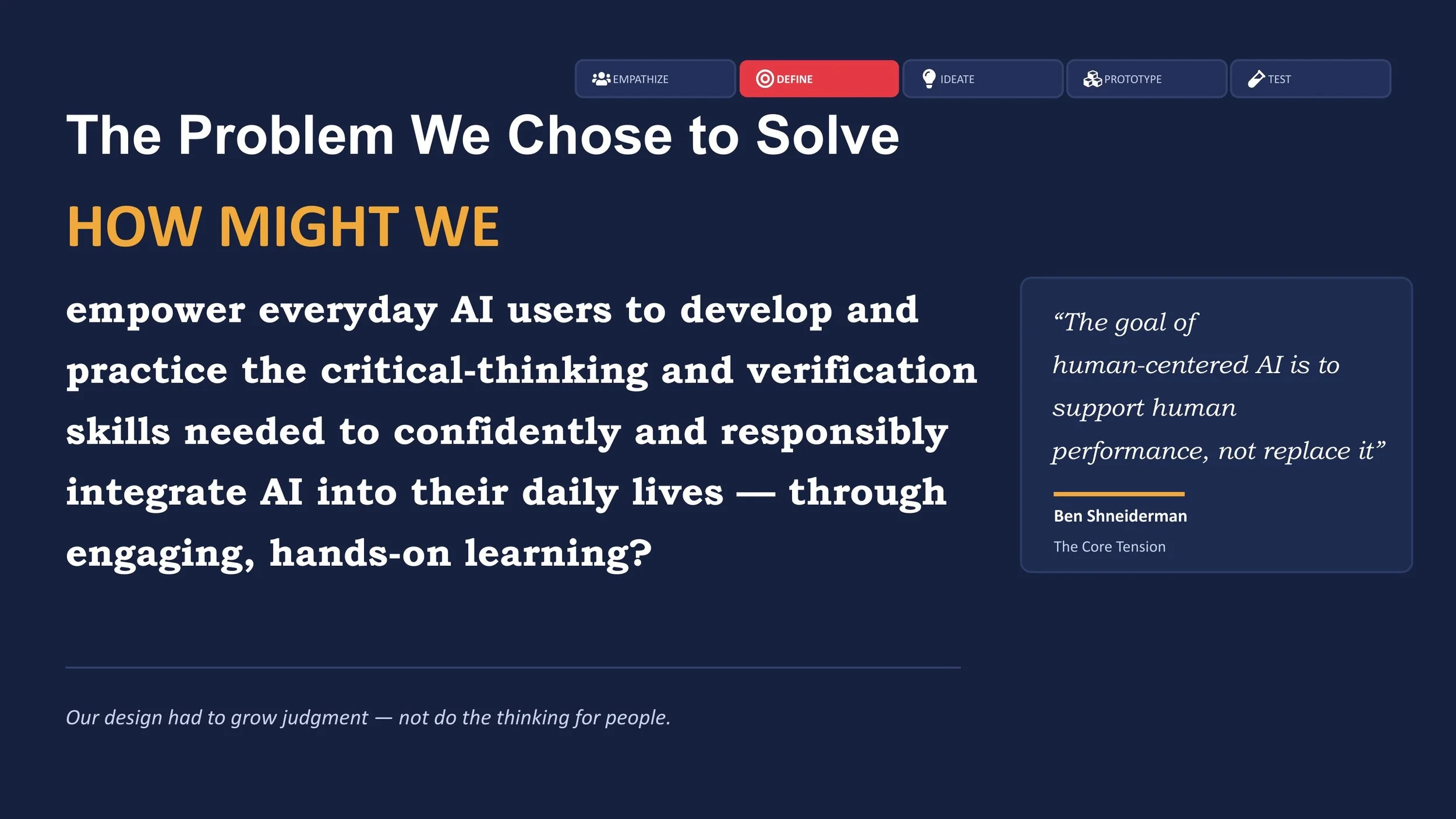
How might we empower everyday AI users to develop and practice the critical-thinking and verification skills needed to confidently and responsibly integrate AI into their daily lives — through engaging, hands-on learning?
Process
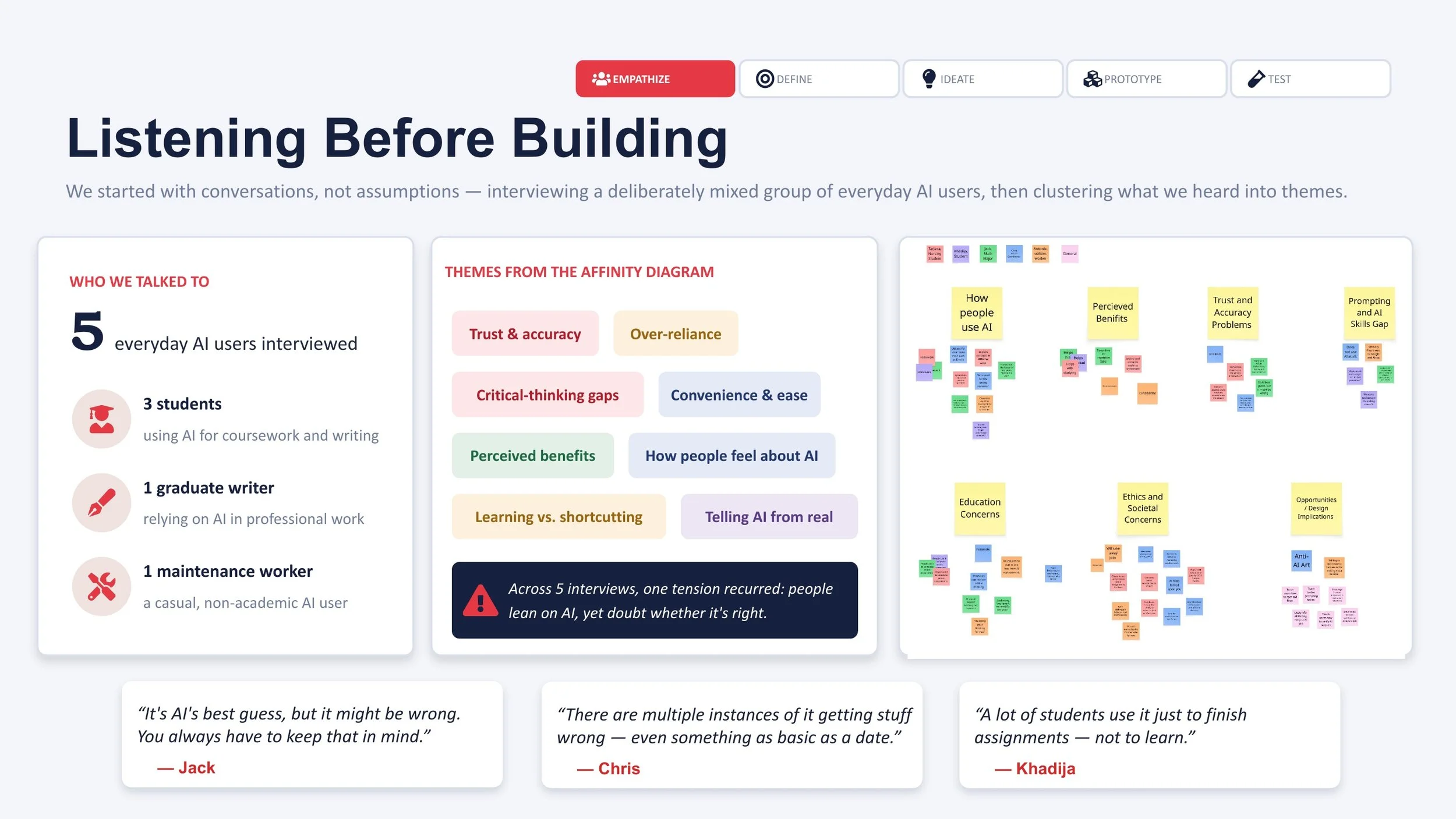
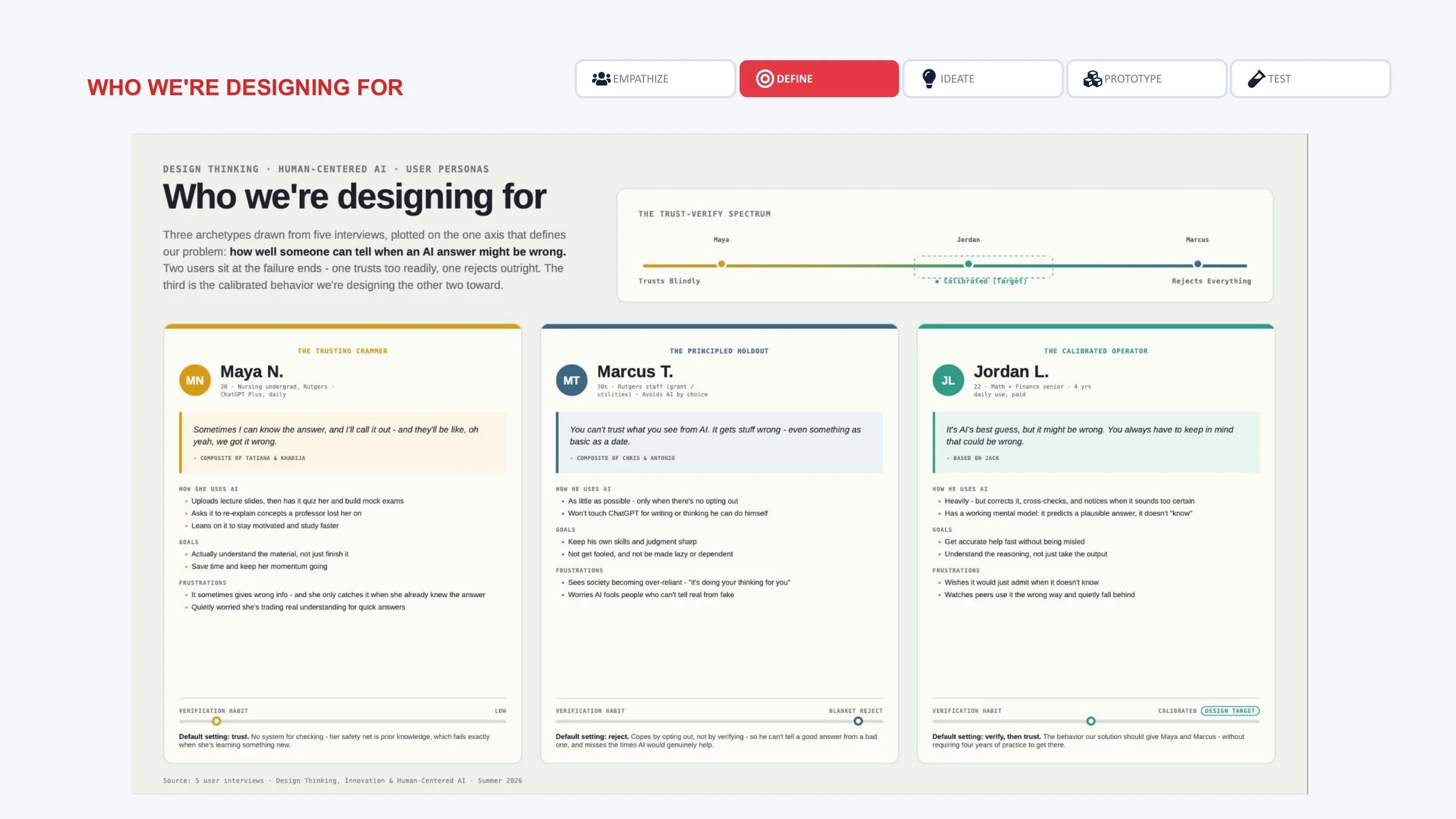
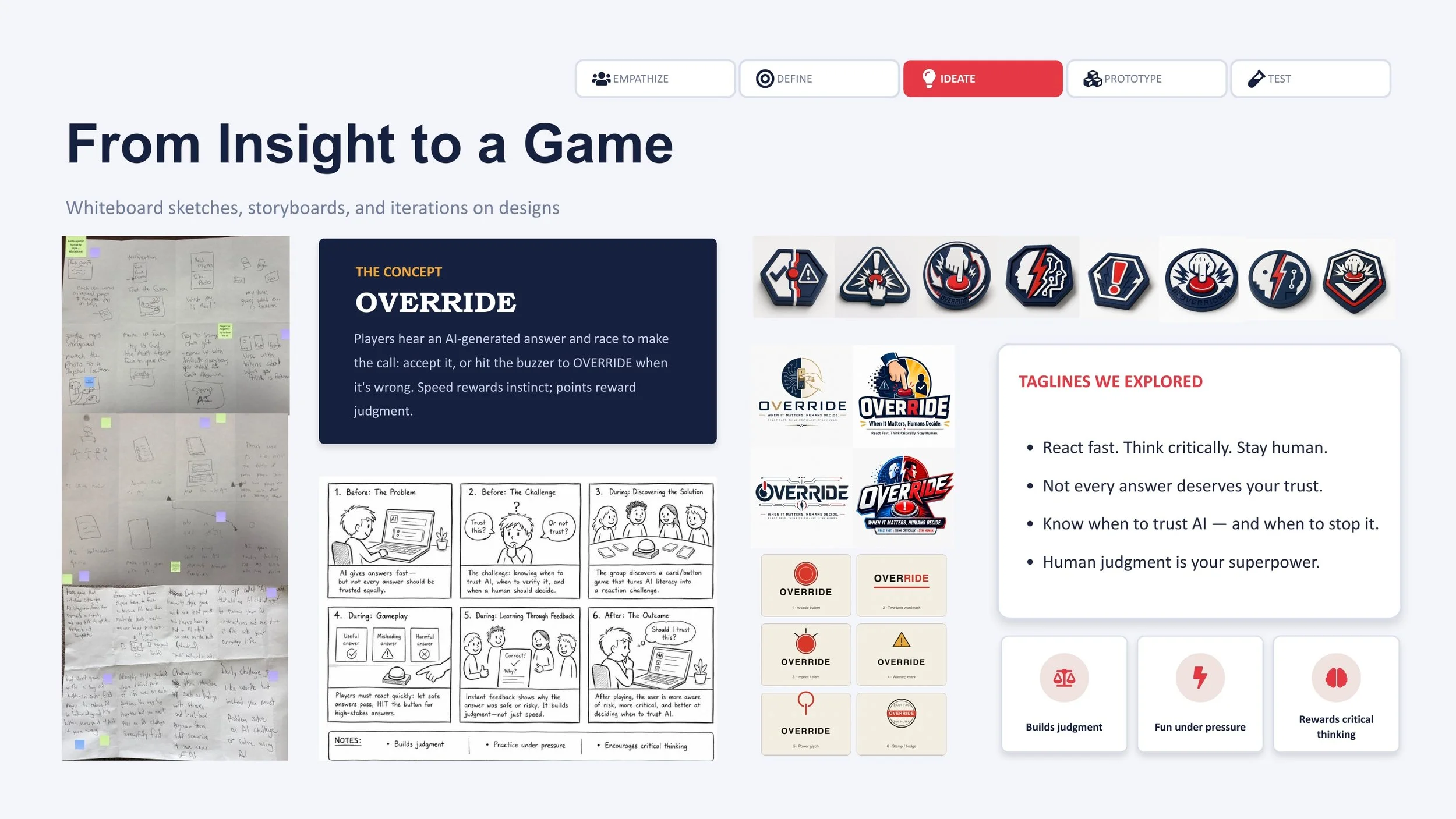
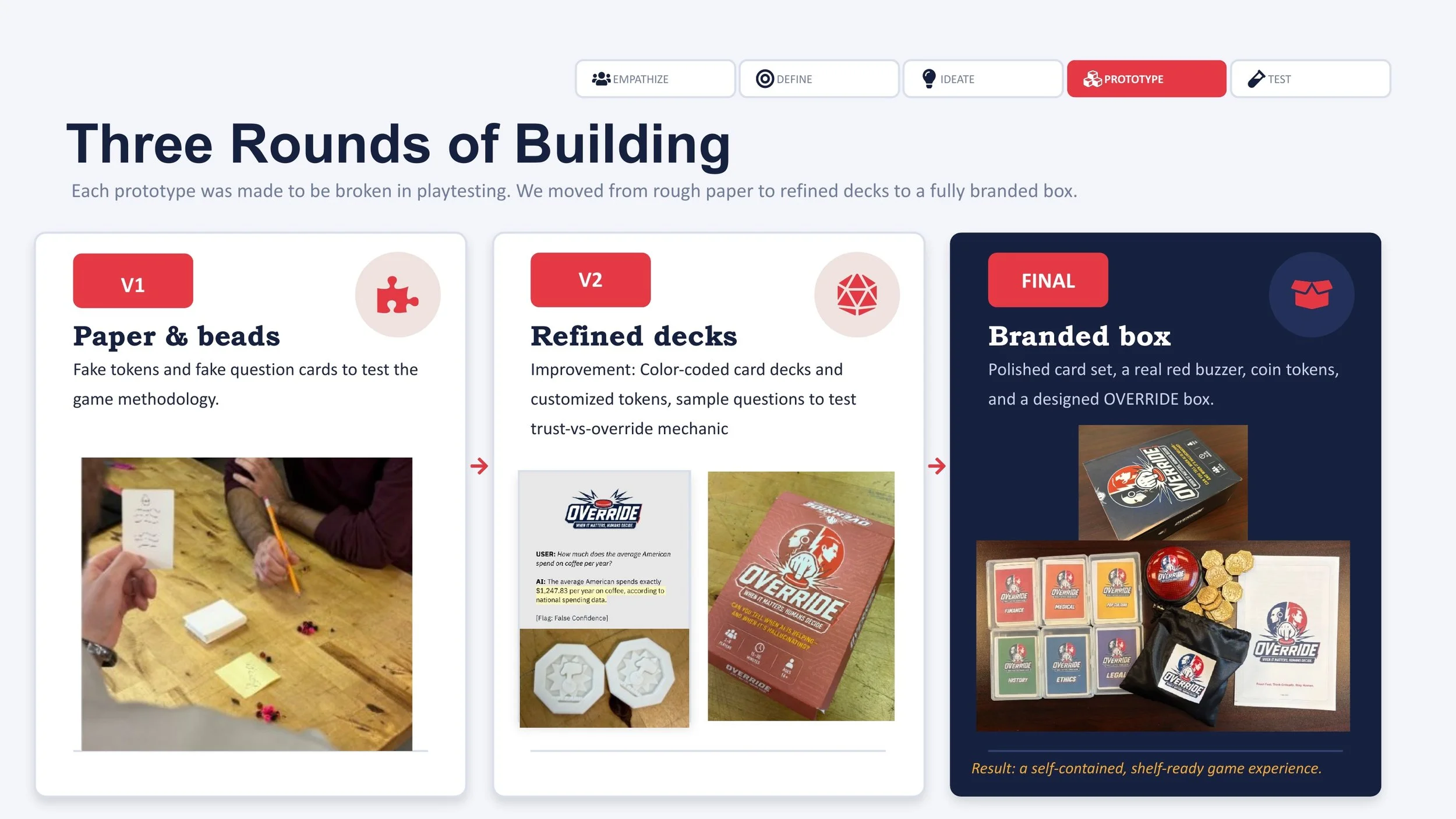
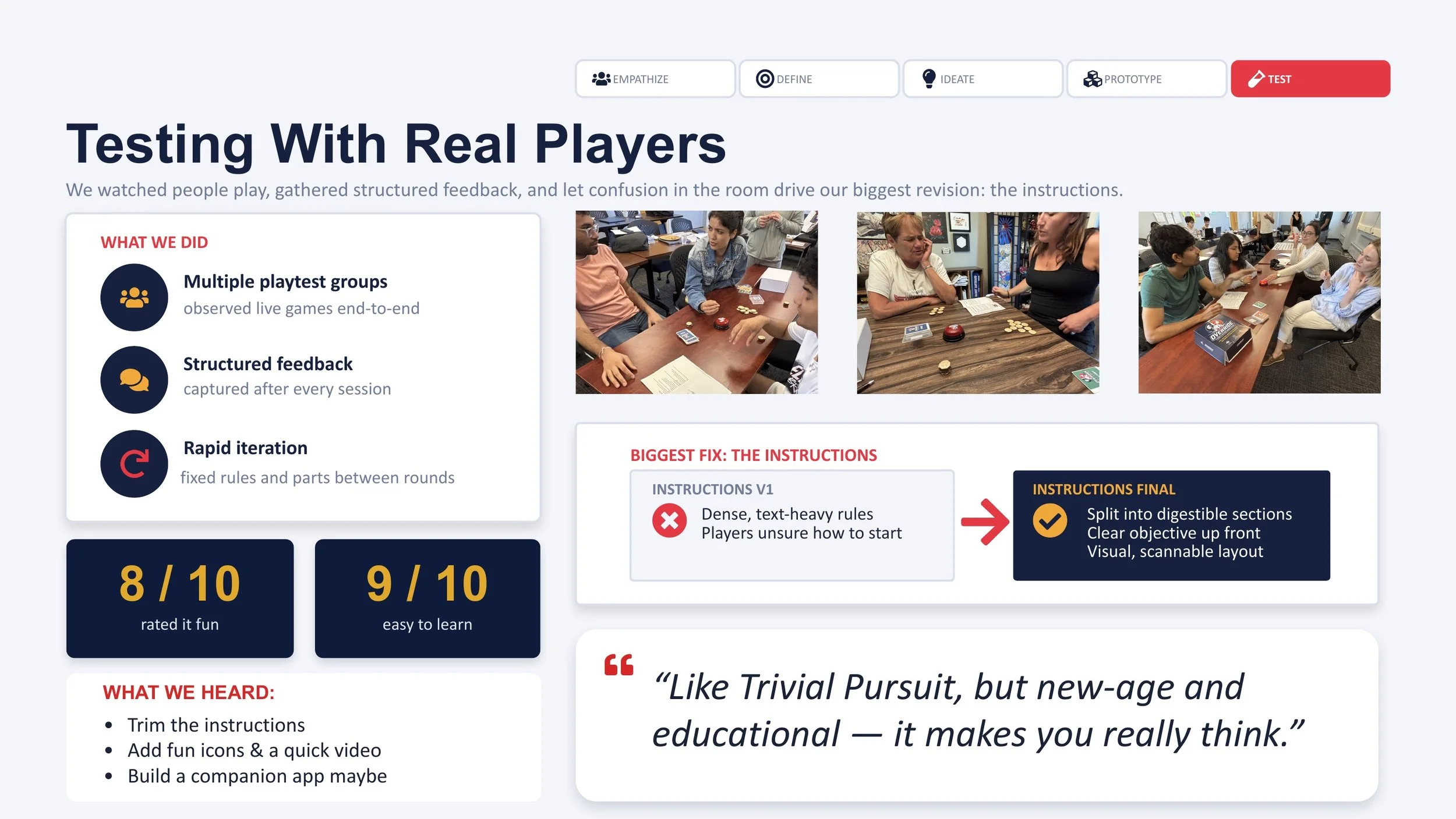
This was a two-week project structured around the five stages of design thinking. We began in Empathize by interviewing five deliberately varied AI users: three students, a graduate writer, and a maintenance worker. Then we clustered what we heard into an affinity diagram, where one tension kept surfacing: people rely on AI yet doubt it. In Define we turned those insights into three personas and a journey map, framing the core problem around how well someone can tell when an AI answer is wrong. Ideate moved from whiteboard sketches and storyboards to the core game concept and branding. In Prototype we built three escalating versions: paper and beads, refined color-coded decks, then a fully branded box, each made to be broken in testing. Finally, in Test we ran multiple live play test groups, captured structured feedback, and iterated; the biggest fix came from watching players get confused by dense rules, which drove a complete redesign of the instructions.
Solution
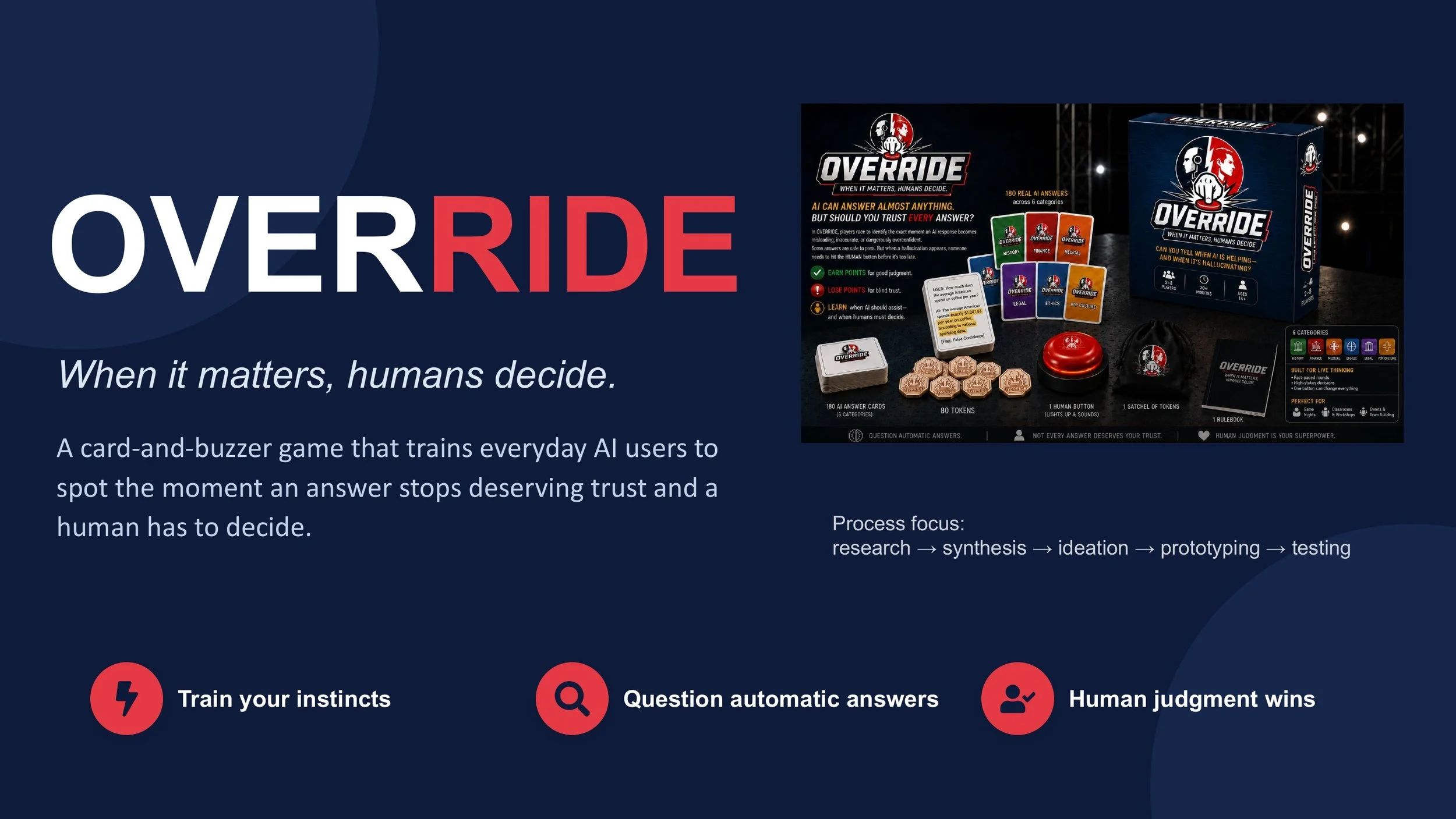
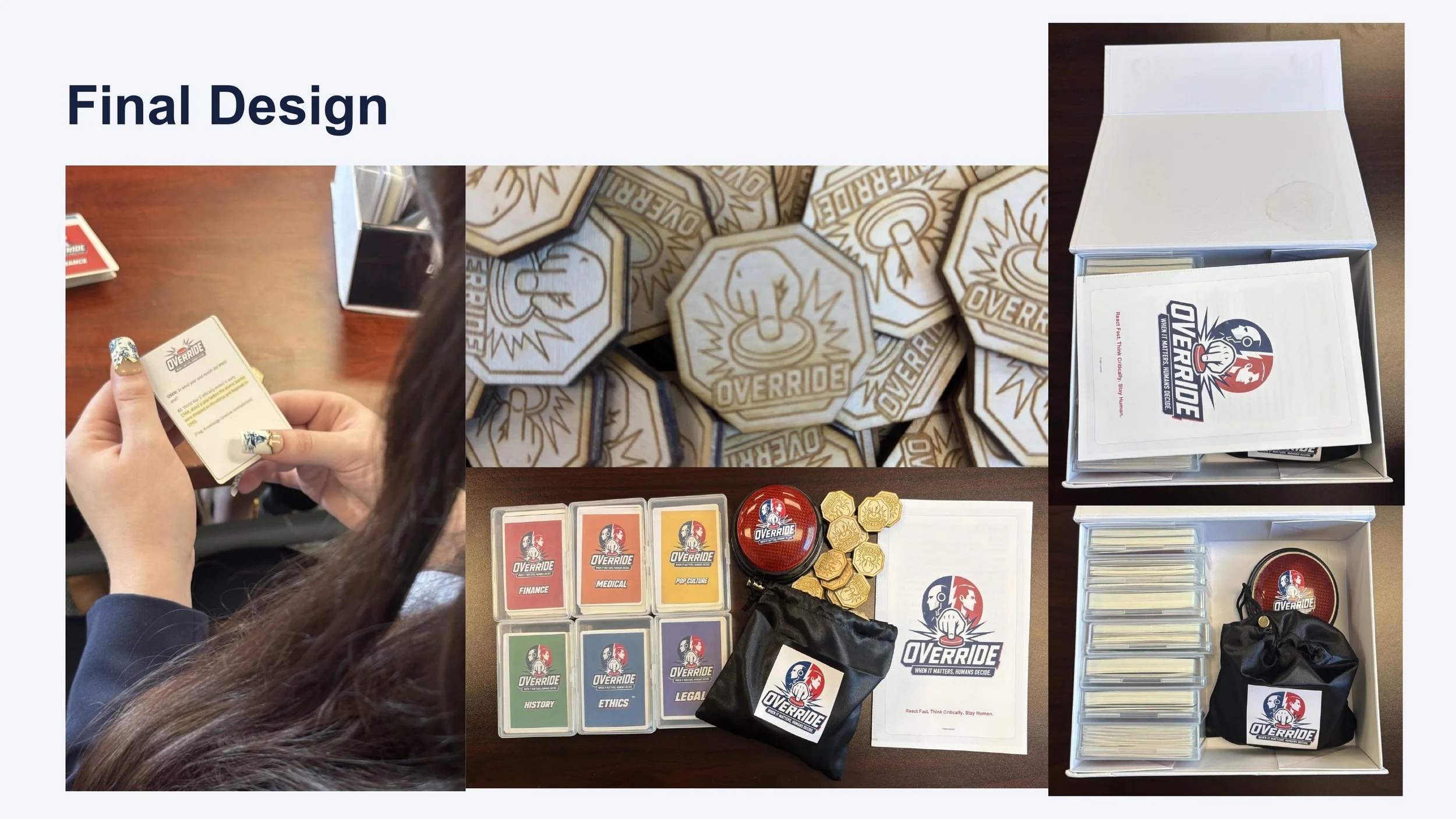
OVERRIDE is a tangible card-and-buzzer game that teaches people when to trust AI and when a human has to step in. Players hear a real AI-generated answer and race to make the call: let it pass, or hit the buzzer to override it when it's misleading, inaccurate, or dangerously overconfident. Speed rewards instinct while points reward judgment, so the game builds a verification reflex through repetition rather than lecturing. It's self-contained and shelf-ready, designed to work in a workplace onboarding session to get employees up to speed on AI, in a classroom, at family game night, or on a Friday night with friends.
Impact
OVERRIDE gives users a sharper, more practiced sense of how to actually use AI in their daily lives: for work, school, or personal decisions. Rather than telling people AI can be wrong, it trains the instinct to catch when it's wrong, helping them navigate a still-new technology with more confidence and less blind trust. Early testers rated it 8/10 for fun and 9/10 for ease of learning, with one calling it "like Trivial Pursuit, but new-age and educational."
My role
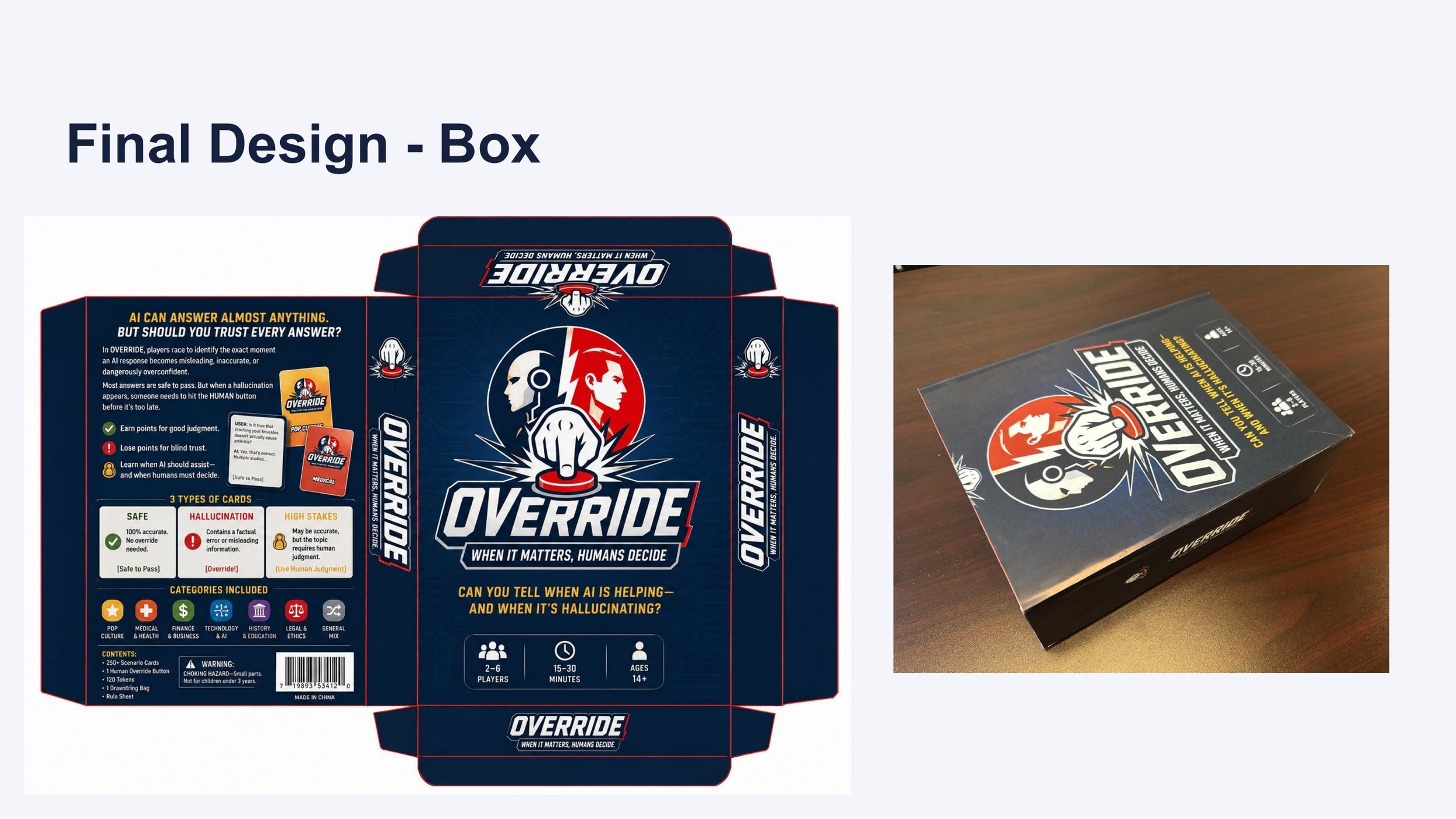
I worked on a three-person team of grad students from different disciplines: one in cybersecurity, one in drug discovery, and me as the designer. I led the design side of the project and the project management side: the personas and journey maps, the visual identity and branding, the card and token system, the box and packaging design, and the physical prototypes that carried us from rough paper through to the final branded build and overall kept the team on track with our project.
The Final Design
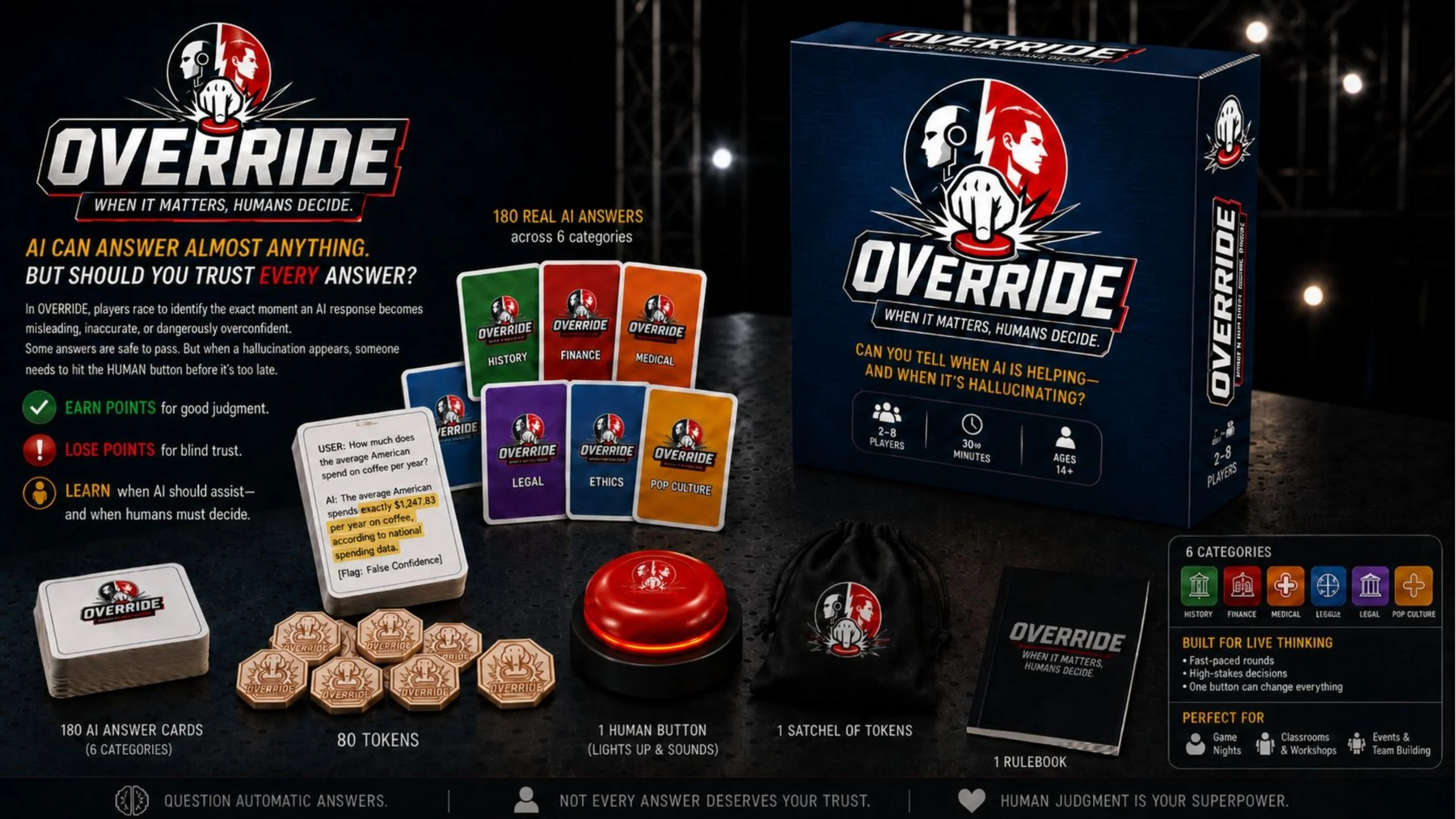
Design Thinking, Innovation, and Human-Centered AI Class | Summer 2026